
Why Standardization Is Essential for Business Growth
One of the most common pieces of advice in entrepreneurship is to build your business with the end goal in mind. This principle is fundamental because the long-term success of any company depends on how effectively it can grow beyond the direct involvement of its owner.
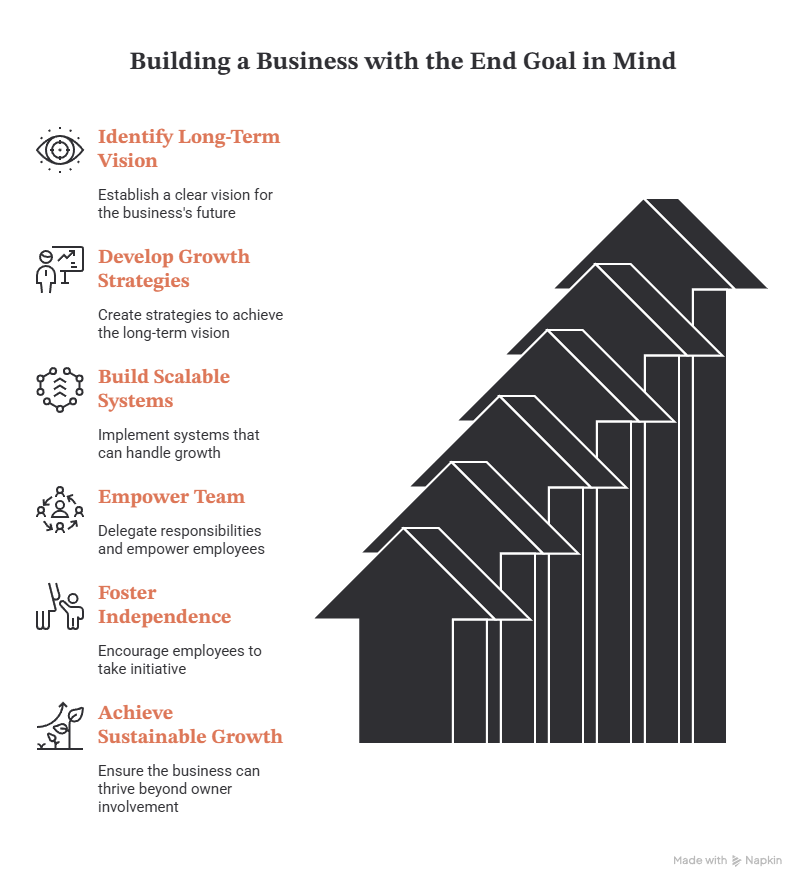
Most business owners determine the size and scope of their business based on their current knowledge, circumstances, or vision for the future. However, sustainable growth requires more than ambition. It requires systems.
As businesses expand, they typically evolve through several stages. While every company is unique, most successful organizations progress through a natural sequence of development.
The Four Stages of Business Expansion
Stage 1: Establishing the Foundation
The first stage focuses on building the core elements of the business, including:
- Defining the company purpose
- Developing products and services
- Creating effective marketing strategies
- Hiring personnel
- Achieving profitability
This stage is where entrepreneurs transform ideas into functioning businesses.
Stage 2: Management and Leadership Development
As the business grows, management structures become necessary.
The owner can no longer oversee every detail, so managers and executives must be developed to handle increasing responsibilities. For many small businesses, this is one of the most challenging phases because it requires delegation, leadership development, and trust.
Stage 3: Standardization
The third stage is where true scalability begins.
Standardization is the process of creating consistent systems, procedures, and expectations throughout the organization.
When every critical function is documented and repeatable, growth becomes significantly easier.
Stage 4: Replication
Replication becomes possible only after standardization has been successfully implemented.
A business cannot be duplicated efficiently if its success depends on the knowledge, talent, or constant supervision of a few key individuals.
Businesses that master standardization create the foundation for multiple locations, franchising opportunities, licensing models, and large-scale expansion.
What Is Business Standardization?
Business standardization is the process of ensuring that products, services, procedures, and operations consistently follow established standards.
In simple terms, it means creating systems that produce the same high-quality results regardless of who performs the task.
A standardized business can:
- Train employees faster
- Maintain consistent customer experiences
- Improve operational efficiency
- Reduce costly errors
- Enhance quality control
- Scale more effectively
- Increase profitability
The ultimate goal is to make excellence repeatable.
Why Franchises Excel at Standardization
Many of the world’s most successful franchise organizations have achieved extraordinary growth because they have standardized nearly every aspect of their operations.
From employee training and customer greetings to product delivery and quality control, every process follows a clearly defined system.
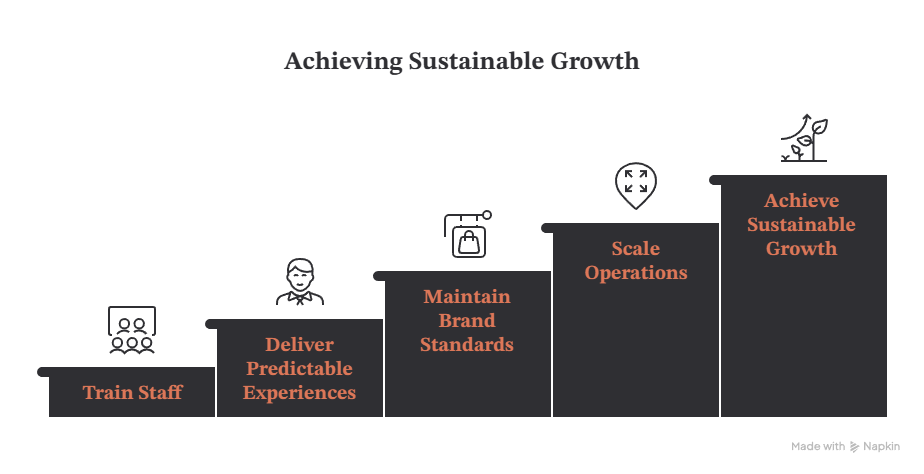
This consistency allows franchise owners to:
- Open new locations efficiently
- Train staff quickly
- Deliver predictable customer experiences
- Maintain brand standards
- Scale operations with confidence
Customers appreciate consistency. They expect the same level of service, product quality, and experience every time they interact with a business.
When standards begin to slip, customers often notice immediately and may start exploring alternatives.
Simplicity Is the Foundation of Scalability
One of the most valuable lessons business owners learn is that complexity often limits growth.
Businesses built around excessive customization frequently become dependent on the owner’s direct involvement. While custom products and services may provide value, they can also create challenges when it comes to training employees and scaling operations.
The more specialized and personalized every process becomes, the harder it is to replicate success consistently.
Successful entrepreneurs understand the importance of simplifying operations wherever possible.
When products, services, and workflows are standardized, employees can be trained faster, managers can oversee operations more effectively, and owners can focus on growth rather than daily problem-solving.
Building Systems That Support Expansion
A scalable business is built on documented systems rather than individual knowledge.
Consider a company that develops structured training programs and apprenticeship systems. Instead of relying on years of experience to perform a job effectively, new team members can learn the necessary skills through a proven process.
The benefits include:
- Faster onboarding
- Reduced training costs
- Lower operational risk
- Increased employee confidence
- Consistent performance
- Improved staff retention
When systems replace guesswork, organizations become stronger and more resilient.
Choosing the Right Target Market for Growth
Business expansion also depends on selecting a sufficiently large target market.
Even the most effective marketing strategy will struggle if there are too few potential customers available.

When evaluating a product, service, or business opportunity, it is important to consider:
- Market size
- Population growth
- Customer demand
- Geographic reach
- Competitive landscape
- Expansion opportunities
A larger target audience generally creates more opportunities for growth than a highly restricted market.
Business owners already face enough challenges in building successful companies. Limiting potential customers unnecessarily can create an additional obstacle to expansion.
What Should Be Standardized in a Business?
To achieve scalable growth, business leaders should focus on documenting and standardizing key operational areas.
Customer and Market Systems
- Ideal customer demographics
- Customer service procedures
- Sales processes
- Marketing campaigns
- Public relations strategies
Operational Systems
- Building and workspace layouts
- Workflow processes
- Departmental procedures
- Quality control systems
- Service delivery methods
Human Resource Systems
- Hiring procedures
- Interview processes
- Employee onboarding
- Training manuals
- Leadership development programs
- Internal promotion systems
Financial Systems
- Budgeting procedures
- Expense management
- Reserve policies
- Profit allocation
- Bonus structures
- Asset management
Technology and Reporting Systems
- Scalable software platforms
- Performance dashboards
- Key performance indicators (KPIs)
- Reporting procedures
- Operational metrics
Legal and Compliance Systems
- Legal documentation
- Risk management procedures
- Compliance policies
- Contract standards
The more clearly these systems are documented, the easier it becomes to maintain consistency during periods of rapid growth.
The Hidden Role of the Business Owner
Many business owners wonder why standards decline whenever they step away from the company for an extended period.
The answer is often simple.
The owner has unknowingly become the quality control system.
Without formalized procedures, managers and employees rely on the owner’s presence to maintain standards.
This dependency creates a bottleneck that limits expansion.
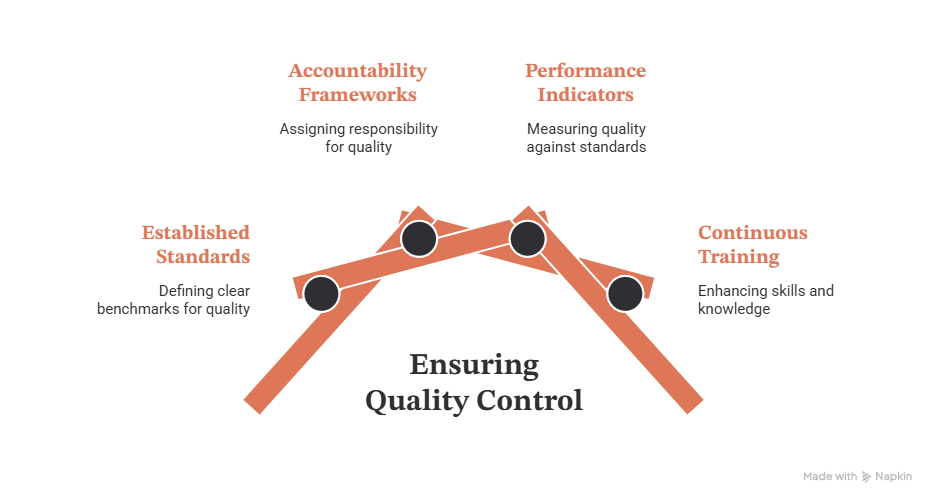
One of the final responsibilities many entrepreneurs must delegate is quality control itself. Achieving this requires documented standards, accountability systems, performance metrics, and ongoing training.
When quality becomes part of the system rather than dependent on an individual, true scalability becomes possible.
The Power of Documentation and Codification
One of the greatest examples of business standardization is the process of documenting successful actions and transforming them into repeatable systems.
The purpose of documentation is not bureaucracy. It is efficiency.
When procedures are clearly written and consistently followed:
- Training becomes easier
- Quality improves
- Mistakes decrease
- Expansion accelerates
- Leadership gains freedom to focus on growth
Documentation transforms individual expertise into organizational knowledge.
How Standardization Fuels Business Expansion
The primary reason for standardization is simple: it frees executives and business owners from day-to-day operational demands.
Instead of constantly solving the same problems, leaders can focus on:
- Strategic planning
- Market expansion
- Innovation
- Leadership development
- New products and services
- Long-term growth initiatives
Without standardization, growth often stalls because leadership attention remains trapped in operational details.
With standardization, the organization gains the ability to scale efficiently while maintaining quality and consistency.
Final Thoughts
Business standardization is one of the most powerful yet overlooked drivers of business growth and scalability.
Companies that document their systems, simplify operations, standardize procedures, and maintain consistent quality create a strong foundation for long-term success.
Whether your goal is to expand locations, improve profitability, develop stronger leadership teams, or create a business that operates independently of the owner, standardization is the bridge that makes those objectives possible.
The discipline required to codify every aspect of a business may seem significant, but the rewards are substantial. Once systems are in place, growth becomes more predictable, training becomes easier, quality remains consistent, and expansion opportunities increase dramatically.
For any business owner seeking sustainable growth, standardization is not just a best practice—it is a necessity.
Thank you for reading. If you have questions about the topics discussed in this article or would like a professional evaluation of your business, contact Dr. Vida Puodziunas at 813-906-0477. We look forward to helping you achieve greater growth, profitability, and success.