
Success in today’s world is rarely about working harder than everyone else. It is about learning continuously, observing carefully, understanding people, recognizing opportunities, and developing a strategy that creates meaningful value.
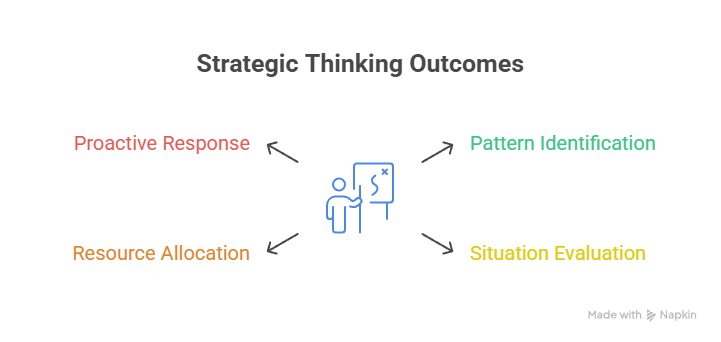
Strategic thinking allows you to look beyond immediate circumstances and understand what is really happening around you. Instead of reacting to every problem, distraction, or opportunity, you learn to identify patterns, evaluate situations, and determine where your time and energy can produce the greatest results.
The most successful people don’t simply ask, “How can I get ahead?”
They ask:
“How can I create enough value to help other people move forward?”
When you consistently help people solve meaningful problems, your own opportunities often grow as a natural result.
Why Strategic Thinking Matters
Many people spend their lives reacting to whatever happens next.
They work, pay bills, respond to problems, follow routines, and repeat the same activities without stepping back to ask whether their actions are actually moving them toward their goals.
Strategic thinking requires a different approach.
It means learning to:
- Observe before reacting
- Identify patterns
- Understand people’s needs
- Evaluate opportunities
- Prioritize important actions
- Anticipate potential problems
- Develop practical solutions
- Focus on long-term outcomes
This doesn’t mean ignoring rules or refusing to cooperate with others. It means developing the discipline to think independently, make informed decisions, and take responsibility for the direction of your life and business.
Discipline Is More Than Following Instructions
Many people confuse discipline with obedience.
True discipline is the ability to control your attention, behavior, and actions in pursuit of a meaningful objective.
Following instructions can be useful, but long-term success often requires initiative.
A disciplined person asks:
What needs to happen next?
Instead of waiting for someone else to provide every instruction, they identify the next useful action and take responsibility for moving forward.
This distinction is particularly important for entrepreneurs, executives, managers, and anyone responsible for creating results.
Learn to Observe Before You React
One of the most valuable strategic thinking skills is observation.
Instead of immediately becoming involved in someone else’s drama, conflict, or problem, take a moment to understand what is actually happening.
Ask:
- What is the person trying to accomplish?
- What problem are they experiencing?
- What information is missing?
- What actions have they already taken?
- What pattern can be identified?
- What kind of help would actually improve the situation?
Observation creates space between an event and your response.
That space allows you to make better decisions.
Understanding Human Behavior
Success also requires understanding human behavior.
People have different motivations, priorities, fears, ambitions, habits, and expectations. Treating everyone exactly the same can lead to poor decisions.
Some people actively seek:
- New knowledge
- Career advancement
- Better tools
- Greater responsibility
- Business opportunities
- Personal development
- New challenges
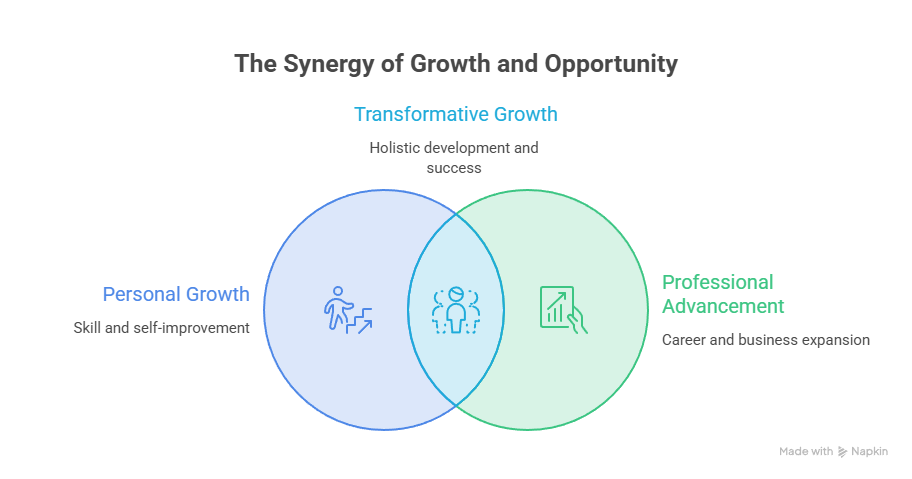
Others may be comfortable with their current circumstances and have little interest in changing them.
Neither situation automatically makes someone good or bad. The important lesson is to understand what a person actually wants before deciding how you can help.
Look for Patterns, Not Just Words
People’s actions often provide useful information.
For example, when evaluating a potential employee, a résumé showing several very short periods of employment may warrant additional questions.
Rather than immediately judging the candidate, investigate the pattern.
Ask:
- What caused each transition?
- What did they learn from those experiences?
- What are they looking for now?
- What kind of environment helps them perform?
- Is there a recurring pattern that could affect their future employment?
Observation should lead to better questions—not automatic conclusions.
A résumé is evidence, not a complete explanation of someone’s character or potential.
Ask Better Questions to Find the Real Problem
Effective problem-solving begins with understanding the real problem.
Imagine someone tells you they recently lost their job.
A reactive response might immediately focus on blame, legal action, or the employer.
A strategic approach begins with questions.
You might ask:
- “What happened?”
- “Were you satisfied with the job?”
- “Had you been thinking about doing something different?”
- “What would you actually prefer to do next?”
- “What did you learn from the experience?”
These questions may reveal information that wasn’t obvious initially.
Perhaps the person had already become bored. Perhaps they wanted a career change. Perhaps the position wasn’t aligned with their strengths.
Once the real situation is understood, better solutions become possible.
This is a core principle of understanding human behavior: don’t assume you know the problem before listening carefully.
Don’t Waste Time on Unproductive Situations
Strategic thinking also involves knowing where not to invest your time.
Your time is limited. Every unnecessary conversation, meeting, argument, or distraction takes attention away from activities that could create meaningful results.
This doesn’t mean treating people disrespectfully or assuming negative intentions. It means learning to establish boundaries and determine whether an interaction has a useful purpose.
If someone contacts you without a clear reason, you can politely ask:
“How can I help you?”
If there is no meaningful purpose, you can respectfully end the conversation and return your attention to your priorities.
Protecting your time is part of protecting your ability to create value.
The Power of Helping Others Succeed
One of the strongest paths to sustainable success is helping other people become more capable.
Instead of simply solving someone’s immediate problem, consider whether you can teach them how to solve similar problems themselves.
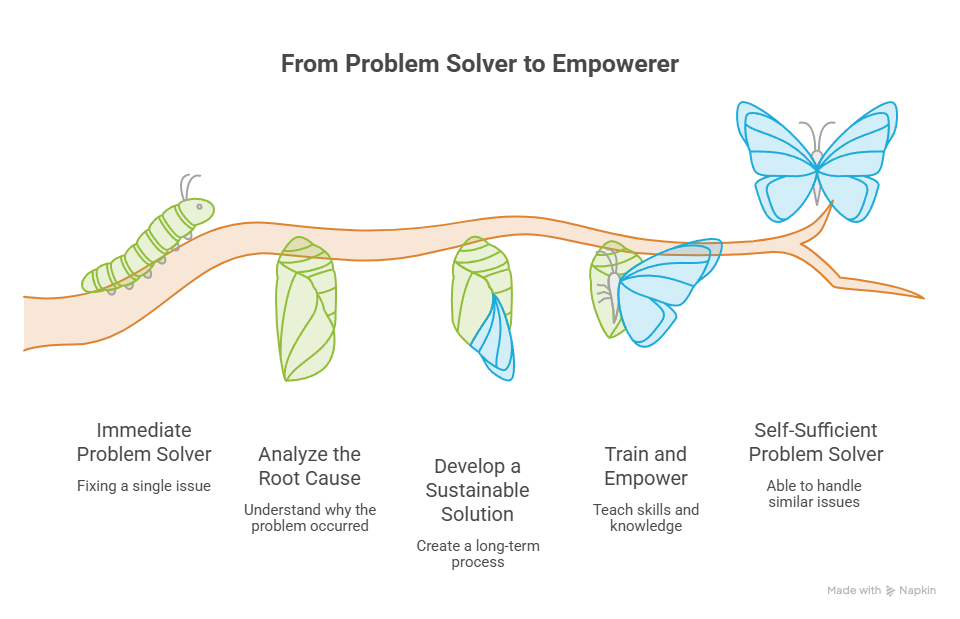
For example, a consultant might not simply fix a company’s sales problem. They could create a sales process, train the team, establish performance metrics, and teach managers how to maintain the system.
The immediate problem gets solved, but the organization also gains a long-term capability.
This creates a much greater form of value.
Create Solutions That Empower People
The best solutions don’t create permanent dependency.
They create capability.
When helping someone, ask:
“How can I put this person in a better position to solve similar problems independently?”
This approach can involve:
- Training
- Coaching
- Consulting
- Systems
- Processes
- Tools
- Educational resources
- Leadership development
- Strategic planning
When people become more capable because of your work, your value increases.
They are more likely to remember you, recommend you, collaborate with you, and seek your expertise again.
The 80/20 Principle and Where to Invest Your Energy
The 80/20 principle is often used as a way of thinking about how a relatively small number of inputs can produce a large portion of results.
In business, for example, a small percentage of customers may generate a significant portion of revenue, or a small number of activities may produce most of the organization’s results.
The same concept can encourage you to examine where your time and energy are producing the greatest impact.
Instead of assuming that everyone needs the same solution, identify the people who:
- Are motivated to improve
- Are willing to take action
- Recognize the value of help
- Are committed to implementing solutions
- Have clear goals
- Are prepared to invest in their development
Your objective isn’t to label people as winners or losers. It is to understand readiness and allocate your resources intelligently.
Winners Study the Person in Front of Them
Successful people don’t use the same solution for everyone.
They listen.
They ask questions.
They identify obstacles.
They understand objectives.
Then they design solutions around the actual situation.
This is especially important in business.
Instead of creating a product and simply trying to convince everyone to buy it, start by understanding the problems your ideal customers are already trying to solve.
Then create a product, service, or program that genuinely addresses those problems.
This is where strategic thinking connects directly with entrepreneurship.
Turn Problems Into Opportunities
Every problem represents an opportunity to create value.
A business opportunity may exist when:
- Customers struggle with a complicated process
- Employees need better training
- Businesses lack effective systems
- Leaders have difficulty delegating
- Customers cannot find a convenient solution
- Companies need help adapting to change
The entrepreneur who recognizes these problems and develops effective solutions has an opportunity to create a valuable business.
The key is not simply identifying problems.
It is understanding them deeply enough to solve them.
Build a Reputation for Creating Results
When you consistently help people achieve meaningful outcomes, your reputation grows.
People begin to associate your name with:
- Expertise
- Reliability
- Solutions
- Leadership
- Results
- Trust
That reputation can create new opportunities through referrals, partnerships, repeat business, and professional relationships.
Wealth and business growth can become a byproduct of consistently creating valuable outcomes for others.
The goal shouldn’t be to manipulate people into giving you money. The sustainable approach is to create enough value that a fair exchange benefits everyone involved.
From Hamster Wheel to Strategic Growth
Many people spend years working harder without changing the underlying structure of their lives or businesses.
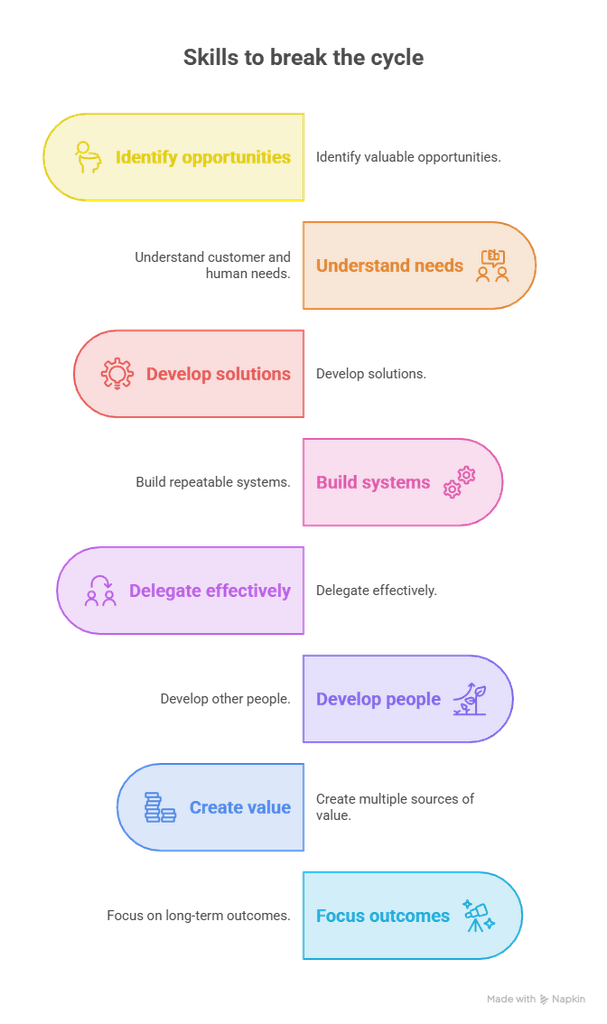
They become trapped in a cycle:
Work → Earn → Spend → Repeat
Breaking that cycle requires more than working longer hours.
It requires learning how to:
- Identify valuable opportunities.
- Understand customer and human needs.
- Develop solutions.
- Build repeatable systems.
- Delegate effectively.
- Develop other people.
- Create multiple sources of value.
- Focus on long-term outcomes.
The goal isn’t to avoid work.
The goal is to make your work more purposeful, productive, and scalable.
A Practical Framework for Strategic Thinking
You can apply the principles in this article using a simple five-step process.
1. Observe
Step back and understand what is actually happening.
2. Ask
Ask questions before making assumptions.
3. Identify
Determine the real problem, opportunity, or objective.
4. Design
Create a solution that addresses the underlying issue.
5. Empower
Whenever possible, help the person or organization develop the capability to continue improving without depending entirely on you.
This framework can be applied to business decisions, hiring, leadership, customer service, consulting, and personal development.
Final Thoughts
Winning in today’s world isn’t about being the most aggressive person in the room or simply working the longest hours.
It is about developing the ability to observe, learn, understand people, recognize opportunities, and act strategically.
Strategic thinking gives you the ability to see beyond immediate problems. Understanding human behavior helps you identify what people actually need. And a commitment to helping others succeed allows you to create value that can produce lasting relationships and opportunities.
The most valuable question you can ask is not:
“How can I get ahead?”
Instead, ask:
“Who can I help, what problem can I solve, and how can I create a solution that produces lasting results?”
When you consistently answer those questions with meaningful action, success becomes less mysterious. You begin to see patterns, recognize opportunities, build stronger relationships, and create systems that produce value.
The world may always be complicated. But the ability to learn, observe, think strategically, and help others gives you a powerful way to navigate it.
Frequently Asked Questions About Strategic Thinking and Success
What is strategic thinking?
Strategic thinking is the ability to look beyond immediate problems and consider the bigger picture. It involves analyzing situations, recognizing patterns, identifying opportunities, anticipating challenges, and choosing actions that support long-term goals.
Why is strategic thinking important for business success?
Strategic thinking helps business owners and leaders make better decisions instead of simply reacting to daily problems. It can improve resource allocation, identify new opportunities, strengthen competitive positioning, and create a clearer path toward sustainable business growth.
How does understanding human behavior contribute to success?
Understanding human behavior helps you recognize people’s motivations, needs, concerns, and decision-making patterns. This can improve communication, leadership, sales, customer relationships, hiring, and problem-solving.
How can I improve my strategic thinking skills?
You can develop strategic thinking by practicing observation, asking better questions, studying business and human behavior, analyzing the results of your decisions, learning from experienced people, and regularly considering long-term consequences before taking action.
How can understanding people improve leadership?
Effective leaders understand that different people have different motivations, strengths, communication styles, and goals. By understanding these differences, leaders can delegate more effectively, provide better coaching, resolve conflicts, and create stronger teams.
What is the connection between helping others and business success?
Helping others solve meaningful problems creates value. When you consistently provide useful solutions, you can build trust, referrals, partnerships, customer loyalty, and a strong professional reputation. Sustainable business success often comes from creating value for others rather than focusing exclusively on personal gain.
How can I identify people who are ready to improve?
Look for people who demonstrate willingness to learn, take responsibility, accept constructive feedback, set goals, and follow through on commitments. Readiness is often demonstrated through actions rather than words.
How can I avoid wasting time on unproductive activities?
Set clear priorities and establish boundaries around your time. Ask whether a conversation, meeting, task, or opportunity contributes to an important objective. Learning to respectfully say no to low-value activities allows you to focus on work that produces meaningful results.
How does the 80/20 principle apply to success?
The 80/20 principle suggests that a relatively small number of activities, customers, or inputs can sometimes generate a large proportion of results. Applying this concept encourages you to identify where your time, resources, and effort create the greatest impact and prioritize those areas.
Can strategic thinking help entrepreneurs identify new business opportunities?
Yes. Strategic thinking helps entrepreneurs recognize unmet needs, recurring problems, changing customer expectations, and inefficiencies. These observations can reveal opportunities for new products, services, partnerships, or business models.
What is the difference between solving a problem and empowering someone?
Solving a problem provides an immediate answer. Empowering someone gives them the knowledge, tools, systems, or skills to handle similar problems in the future. Empowerment can create more lasting value for individuals and organizations.
How can I apply strategic thinking to my business?
Start by identifying your most important business objective. Then examine your customers, employees, competitors, resources, and current processes. Identify the biggest obstacles and opportunities, develop an action plan, measure the results, and continuously adjust your strategy based on what you learn.
Is success really about working harder?
Hard work is valuable, but working harder without direction can keep you trapped in repetitive activities. Sustainable success also requires strategic thinking, prioritization, continuous learning, effective systems, and the ability to create value for others.
What is the most important lesson about winning in business and life?
One of the most important lessons is to become a disciplined observer and problem solver. Learn continuously, understand people, recognize meaningful opportunities, and focus your energy on helping others achieve valuable outcomes. When you consistently create value, your own opportunities for growth can increase as a natural result.
Ready to take a closer look at what may be holding your business back—or where your greatest opportunities for growth may be?
At SBM Business Centers, we help business owners evaluate where they are today and create a clearer path toward greater profitability, stronger systems, and more freedom.
Contact Vida Puodziunas at 813-906-0477 to receive your free Business Analysis and Consultation and discover where your business has the greatest opportunity to improve.