

The Importance of Setting New Goals for Long-Term Success
One of the biggest challenges faced by business owners, entrepreneurs, and professionals is maintaining the same level of excitement and motivation after achieving success. What was once a challenging and inspiring journey can eventually begin to feel routine.
Many people say that a business, project, or career “gets old.” In reality, the game itself does not become old. What often happens is that people stop creating, innovating, and setting new targets. Without fresh challenges, growth slows, enthusiasm fades, and performance begins to decline.
The key to sustained success is continuously establishing new goals that create purpose, direction, and momentum.
Why People Lose Motivation After Achieving Their Goals
When people first start a business, launch a new project, or pursue a personal ambition, they are driven by a powerful vision. They have clear objectives and are excited by the challenge of achieving them.
However, once those goals are accomplished, many individuals unknowingly enter a period of stagnation.
The reason is simple: they have already won the game they originally set out to play.
Without realizing it, they continue operating under the same targets they established years earlier. Because those goals have already been achieved, there is no longer a compelling challenge driving them forward.
This is why successful business leaders regularly review and update their goals. They understand that growth requires continuous expansion of vision and purpose.
The Importance of Keeping Goals Visible
One of the most effective strategies for achieving long-term business growth is keeping goals visible and reviewing them regularly.
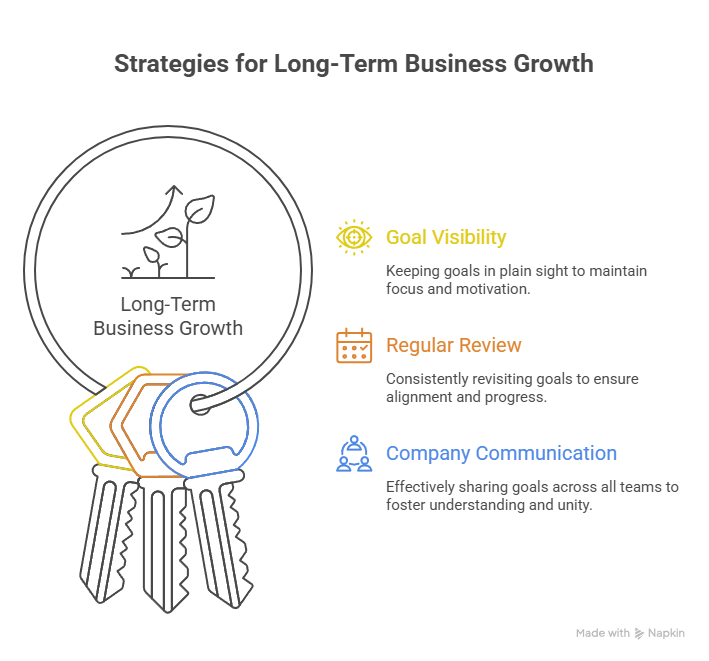
Many people make the mistake of writing down their goals and then filing them away, never to be reviewed again. Over time, they lose sight of the original purpose that motivated them.
Successful organizations consistently communicate goals throughout the company. Teams understand what they are working toward and why those objectives matter.
Benefits of keeping goals visible include:
- Increased focus and productivity
- Better decision-making
- Higher employee engagement
- Stronger accountability
- Improved team alignment
- Greater motivation and commitment
When goals remain visible, they continue to inspire action and progress.
Set Goals Without Limiting Your Growth
One common mistake in goal setting is creating targets that place an artificial ceiling on future success.
For example:
“We will reach $5 million in revenue within five years.”
While this may seem like a strong goal, it can unintentionally create a limit. Once the target is achieved, growth may slow because the organization subconsciously believes it has reached its destination.
A better approach is to create expansion-oriented goals such as:
“We will exceed $5 million in revenue within five years and continue growing toward $10 million and beyond.”
This type of goal encourages ongoing business development and continuous improvement.
The most successful businesses understand that growth is not a destination—it is a process.
Think Bigger Than Your Original Targets
Goals and intentions can have a powerful influence on future results.
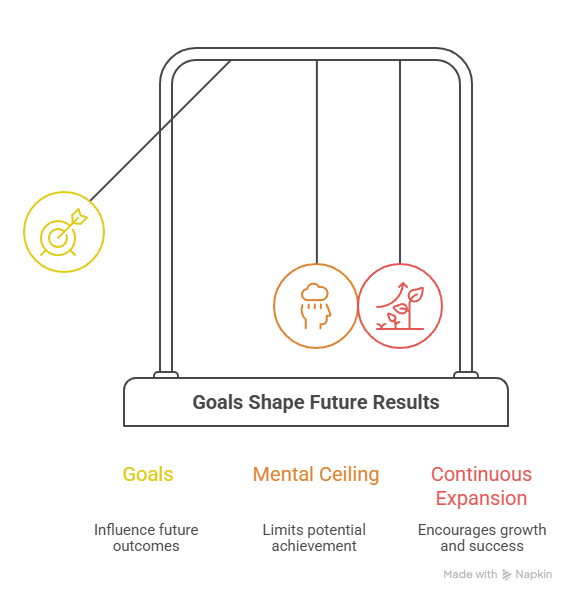
For example, someone may decide early in their career that earning $100,000 annually would represent financial success. Years later, they may find themselves consistently earning around that amount but struggling to exceed it.
Why?
Because their original target became a mental ceiling.
To achieve extraordinary results, it is important to think beyond current limitations and create goals that encourage continuous expansion.
Successful entrepreneurs, executives, and leaders consistently challenge themselves with larger visions and higher expectations.
How Hidden Goals Can Limit Business Growth
Sometimes businesses unknowingly reach a previously established goal and then begin to plateau.
Consider a medical practice where the owner initially decides that 300 patient visits per week would represent a successful operation.
After several years, the practice reaches that milestone.
The team celebrates the achievement, but without setting a new target, growth slows. Patient visits stabilize, momentum decreases, and eventually the practice begins to decline.
This phenomenon occurs because the original goal was achieved, but no new game was created.
Many businesses experience this exact situation. They reach a target, fail to establish a new vision, and gradually lose the energy that fueled their initial success.
Recognizing When You Need New Goals
There are several warning signs that indicate it may be time to create new goals and targets:
- Revenue has plateaued
- Productivity has slowed
- Team motivation is decreasing
- Innovation has stalled
- Growth has become predictable
- Employees appear disengaged
- The business feels repetitive or uninspiring
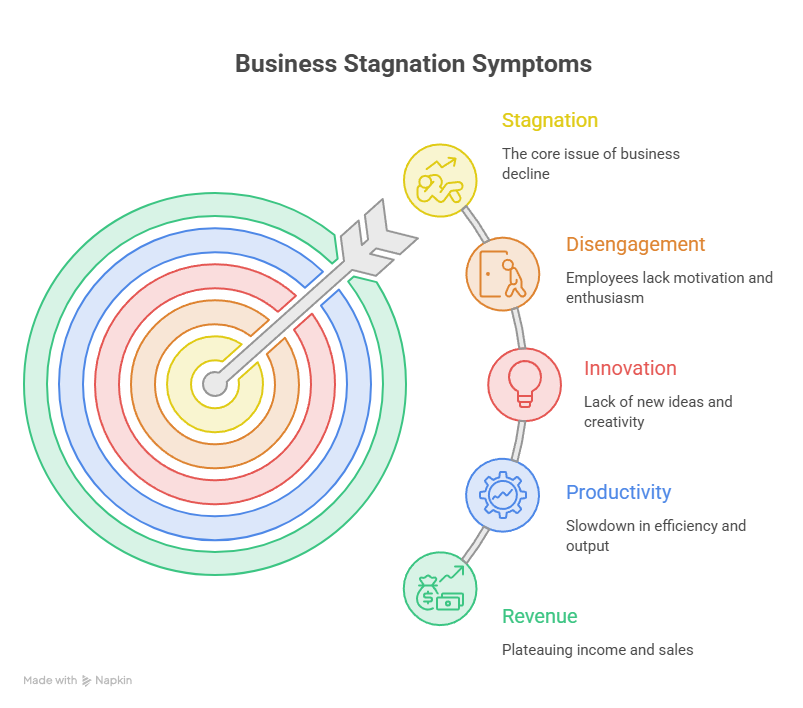
These signs often indicate that the current game has already been won and a new challenge is needed.
How to Get Out of a Business Rut
Breaking out of a rut often requires a meaningful change that creates new excitement and opportunity.
This does not necessarily mean starting over. Instead, it may involve creating a new vision for the future.
Possible strategies include:
Expand Your Services
Introduce new products or services that provide additional value to customers and open new revenue streams.
Enter New Markets
Explore different geographic locations, customer segments, or industries.
Upgrade Your Facilities
A new office, renovated workspace, or improved environment can energize both employees and leadership.
Develop New Leadership Roles
Give team members opportunities to take on greater responsibilities and contribute to company growth.
Launch a Major Growth Initiative
Set ambitious goals that inspire everyone to think bigger and perform at a higher level.
The key is to create something that genuinely excites you and your team.
The Power of a Renewed Purpose
Every successful organization thrives on purpose.
When people feel connected to a meaningful objective, they become more productive, engaged, and committed. New goals create new energy. New targets create new opportunities. New challenges inspire innovation and creativity.
For this reason, businesses should regularly document their accomplishments, celebrate wins, and then establish a new game with larger objectives and greater possibilities.
A renewed purpose helps organizations maintain momentum while avoiding complacency.
Final Thoughts
Long-term success is not achieved by reaching a single goal. It is achieved by continually creating new goals, new targets, and new opportunities for growth.
Businesses, careers, and personal achievements do not become stale because the game gets old. They become stagnant when people stop creating new challenges and stop expanding their vision.
If your business, team, or career feels stuck, review the goals that originally inspired you. Determine whether they have already been achieved. If they have, it may be time to create a new game.
The organizations that continue to grow year after year are those that consistently set bigger goals, embrace new challenges, and pursue a vision that extends far beyond their current level of success.
If you found this article helpful or would like to learn more about how to improve and grow your business, we would be happy to help. For questions or to schedule a business evaluation, please contact Dr. Vida Puodziunas at 813-906-0477.