
Many business owners dream of having a company that provides freedom, financial security, and the opportunity to focus on long-term growth. Yet countless entrepreneurs find themselves trapped in a never-ending cycle of putting out fires, solving daily problems, and working longer hours just to keep the business operating. The missing piece is often business systems that create consistency, efficiency, and scalability.
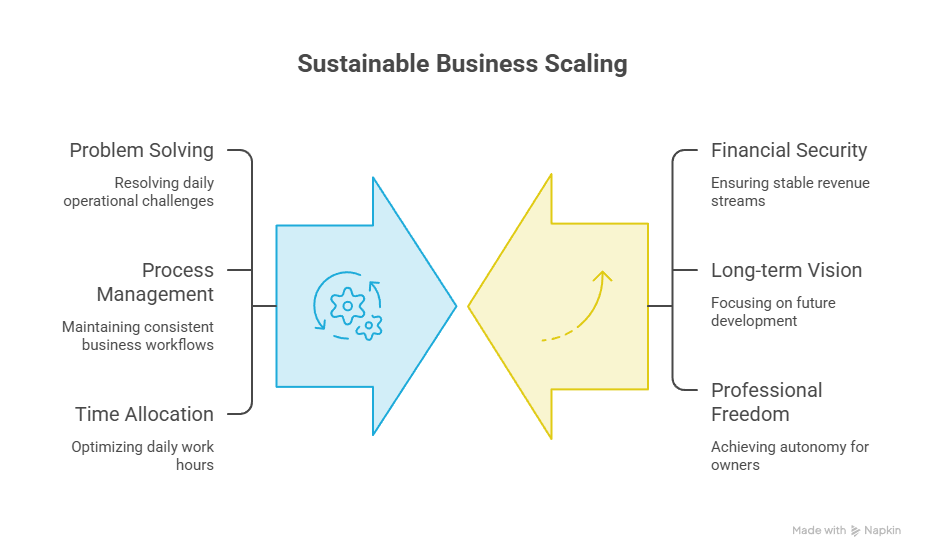
This is commonly known as the business hamster wheel—a situation where the owner becomes so essential to the daily operation that the business cannot function effectively without them.
The good news is that this situation is not permanent.
By implementing strong business systems, effective delegation, and continuous staff development, business owners can escape the hamster wheel and create an organization capable of sustained business growth.
What Is the Business Hamster Wheel?
The hamster wheel represents a business model where the owner is constantly busy but rarely moving closer to long-term goals.
Instead of building the business, they spend most of their time:
- Solving urgent problems
- Managing daily operations
- Answering employee questions
- Handling customer issues
- Completing technical work
- Making every important decision
Although they work harder than ever, little time remains for planning, innovation, expansion, or leadership.
Eventually, the business becomes dependent on one person—the owner.
That dependency limits growth.
Every Trap Begins With a Decision
One of the most important lessons in business is that most business owners unintentionally create the very situations that later frustrate them.
Few people deliberately choose to become overwhelmed.
Instead, they gradually make decisions such as:
- “I’ll do it myself.”
- “It’s faster if I handle it.”
- “Nobody can do it as well as I can.”
- “I’ll train someone later.”
- “We’re too busy to create systems.”
These decisions may solve today’s problem but often create tomorrow’s bottlenecks.
Recognizing the decisions that created the trap is the first step toward escaping it.
Vision Determines the Size of the Business
A powerful illustration of this principle can be seen in the different visions held by the founders of McDonald’s and Ray Kroc.
The McDonald brothers built an excellent restaurant with the goal of achieving financial security.
Ray Kroc saw something much larger.
His vision extended far beyond one successful restaurant. He imagined thousands of locations serving customers across entire countries.
Neither vision was wrong.
The difference was simply the size of the goal.
Business growth is often limited more by leadership vision than by market opportunity.
Owners who continually think about expansion naturally build businesses capable of achieving it.
Delegation Is the Foundation of Business Growth
No business can grow if every important task depends on one individual.
Effective delegation allows owners to shift their attention from working in the business to working on the business.
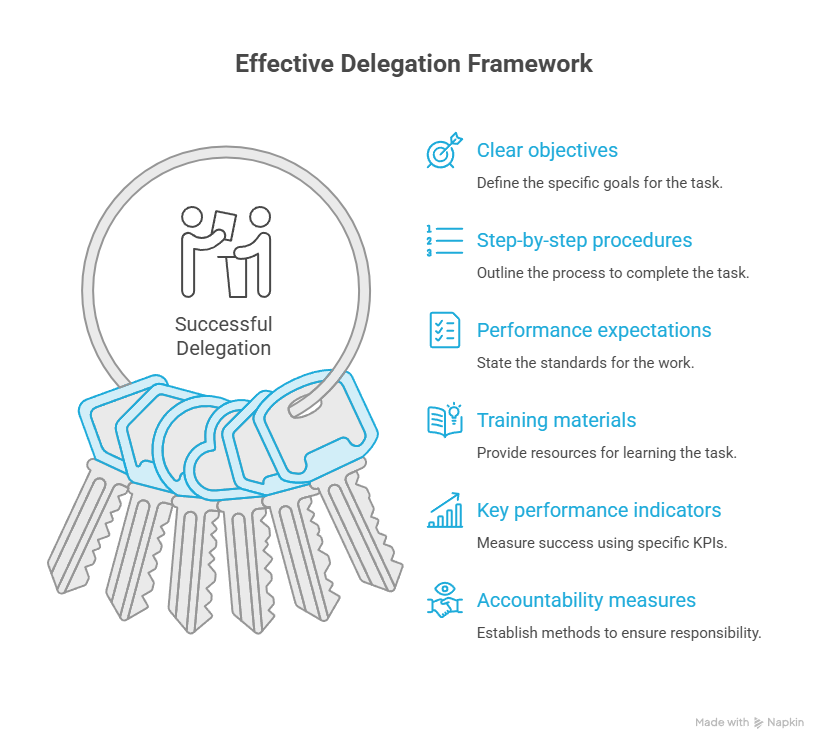
Successful delegation begins with documentation.
Every important responsibility should include:
- Clear objectives
- Step-by-step procedures
- Performance expectations
- Training materials
- Key performance indicators (KPIs)
- Accountability measures
When responsibilities are clearly documented, employees gain confidence, consistency improves, and owners regain valuable time.
Delegation is not giving work away.
It is building organizational capacity.
Why Business Owners Struggle to Delegate
Many entrepreneurs understand the importance of delegation yet continue doing everything themselves.
Common reasons include:
- Feeling indispensable
- Fear that others won’t perform as well
- Lack of documented procedures
- Poor employee training
- Perfectionism
- Resistance to changing existing routines
- Limited leadership development
- Short-term thinking
Ironically, these same beliefs become the greatest obstacles to expansion.
The owner becomes the bottleneck.
Small Transactions Often Create Bigger Workloads
Business owners sometimes assume that higher sales volume automatically creates greater success.
However, transaction size significantly affects operational efficiency.
Businesses built around many low-value transactions often require:
- More sales appointments
- More invoices
- More customer service
- More accounting
- More collections
- More scheduling
- More administrative support
Although revenue may appear healthy, administrative demands consume enormous amounts of management time.
Larger-value products or services often reduce operational complexity while allowing teams to focus on delivering exceptional customer value.
Business owners should regularly evaluate whether their pricing model supports long-term scalability.
The Decision to Change Changes Everything
Many entrepreneurs recognize the need for change but delay taking action.
The primary reason is usually fear.
Fear of:
- Losing existing income
- Making expensive mistakes
- Entering unfamiliar markets
- Hiring additional staff
- Letting go of responsibilities
- Investing in systems
Education is one of the most effective ways to overcome fear.
Learning from experienced mentors, business coaches, books, online courses, and proven business systems increases confidence and improves decision-making.
Knowledge reduces uncertainty.
Confidence encourages action.
Action creates growth.
Build a Business That Serves Customers First
Many businesses unintentionally become focused primarily on making money.
While profitability is essential, sustainable businesses are built around creating exceptional customer experiences.
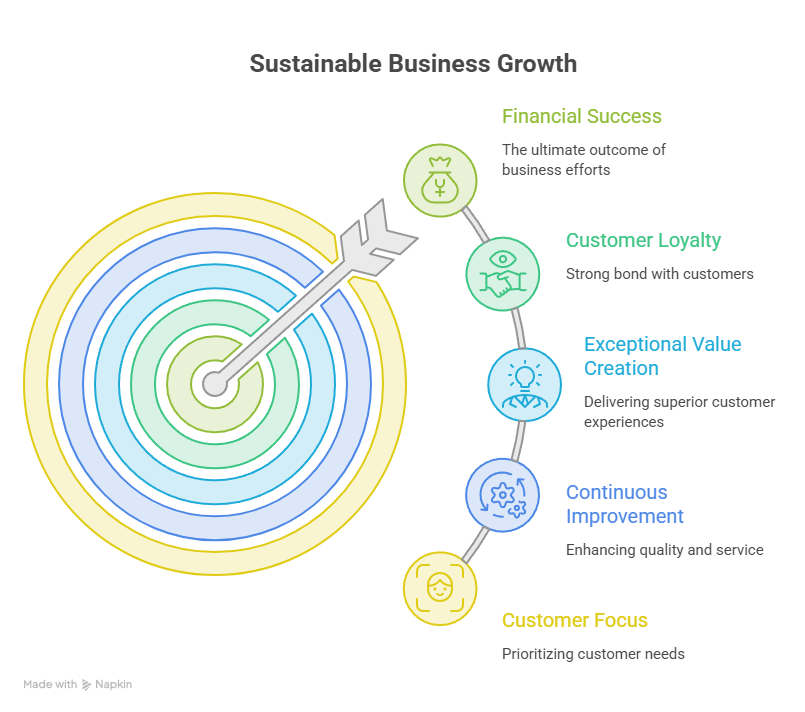
Companies that consistently grow focus on:
- Solving customer problems
- Delivering outstanding service
- Exceeding expectations
- Building long-term relationships
- Continuously improving quality
Happy customers generate referrals, repeat business, positive reviews, and stronger brand loyalty.
Financial success naturally follows exceptional value creation.
Marketing Drives Expansion
Many struggling businesses reduce marketing during difficult periods.
Successful businesses often do the opposite.
Marketing should be viewed as an investment rather than an expense.
Consistent marketing:
- Generates new leads.
- Strengthens brand awareness.
- Builds customer trust.
- Increases market share.
- Creates predictable revenue.
Many growing businesses invest a meaningful percentage of their revenue into ongoing marketing because they understand that today’s promotion creates tomorrow’s opportunities.
Without consistent marketing, business growth eventually slows.
The True Responsibilities of a Business Owner
Many owners spend their days performing technician-level work instead of executive-level leadership.
The primary responsibilities of a business owner include:
- Creating long-term business plans
- Defining company vision and mission
- Developing growth strategies
- Monitoring financial performance
- Building leadership teams
- Recruiting talented employees
- Improving business systems
- Reviewing key performance metrics
- Identifying expansion opportunities
- Strengthening company culture
Owners who spend all day performing operational tasks rarely have enough time to fulfill these higher-level responsibilities.
Leadership—not busyness—creates growth.
Staff Training Is the Secret to Escaping the Hamster Wheel
Perhaps the greatest difference between businesses that plateau and those that scale successfully is their commitment to employee development.
Many small businesses rely almost entirely on informal “on-the-job” training.
While this may work temporarily, it often produces inconsistent performance and continual management problems.
Successful organizations create structured training programs that include:
- New employee onboarding
- Written procedures
- Leadership development
- Technical skills training
- Customer service training
- Ongoing professional development
- Performance coaching
Training creates confident employees.
Confident employees require less supervision.
Less supervision gives owners more time to lead the business.
Training is one of the highest-return investments a company can make.
Systemize Everything That Can Be Repeated
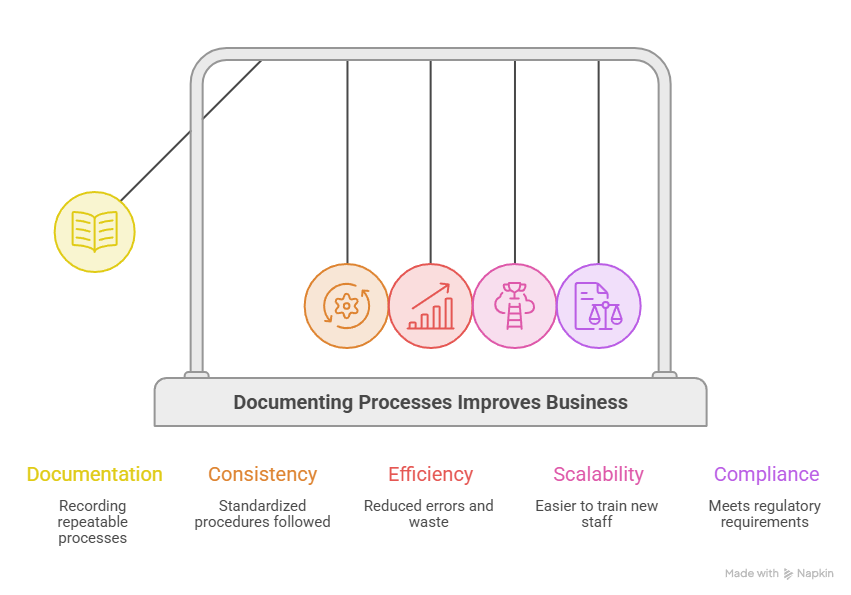
Businesses become scalable when routine activities are standardized.
Every repeatable process should be documented.
Examples include:
- Sales procedures
- Customer onboarding
- Marketing campaigns
- Hiring processes
- Financial reporting
- Inventory management
- Customer support
- Quality control
- Staff training
- Performance reviews
Strong business systems reduce errors, improve consistency, and allow businesses to grow without sacrificing quality.
Systems allow people to succeed.
Practical Steps to Get Off the Hamster Wheel
If you want greater freedom and sustainable business growth, begin with these actions:
- Document every major business process.
- Delegate responsibilities with clear expectations.
- Invest in continuous staff training.
- Build leadership within your organization.
- Focus on high-value activities instead of daily emergencies.
- Review business performance using measurable statistics.
- Create systems that reduce owner dependency.
- Maintain consistent marketing efforts.
- Regularly evaluate opportunities for expansion.
- Spend more time leading the business than working inside it.
Small improvements made consistently create extraordinary long-term results.
Final Thoughts
Escaping the hamster wheel is not about working fewer hours—it is about working on the right activities.
Business owners who continually perform technician-level tasks eventually limit the growth of their organizations.
Those who invest in business systems, leadership, delegation, staff development, and strategic planning create businesses that operate efficiently without constant supervision.
True business growth occurs when the owner is no longer the center of every decision.
Instead, they become the architect of a business built on capable people, proven systems, and continuous improvement.
The goal is not simply to own a business.
The goal is to build one that creates freedom, serves customers exceptionally well, develops great people, and continues growing for years to come.
Frequently Asked Questions
1. What does it mean to be on the business hamster wheel?
Being on the business hamster wheel means constantly working in daily operations without making progress toward long-term goals. The owner becomes essential to every task, limiting business growth.
2. How can business owners get off the hamster wheel?
Business owners can escape the hamster wheel by documenting processes, delegating responsibilities, implementing business systems, investing in staff training, and focusing on strategic leadership instead of daily operations.
3. Why are business systems important?
Business systems create consistency, improve efficiency, reduce mistakes, simplify employee training, and allow businesses to scale without depending entirely on the owner.
4. Why is staff training essential for business growth?
Well-trained employees perform with greater confidence, require less supervision, make better decisions, and contribute more effectively to company goals. Continuous training supports long-term business expansion.
5. What is the biggest obstacle to business growth?
One of the biggest obstacles is owner dependency. When the owner handles every important task instead of building systems and developing people, the business cannot grow beyond the owner’s available time and capacity.
No matter where you are in your business journey, you don’t have to navigate it alone. At SBM Business Centers, we are committed to helping business owners think like executives, build stronger companies, and create lasting success. If you would like to learn how we can help your business grow, schedule a complimentary business analysis and consultation with Vida Puodziunas by calling 813-906-0477. We look forward to partnering with you and helping you build the business you’ve always envisioned.