

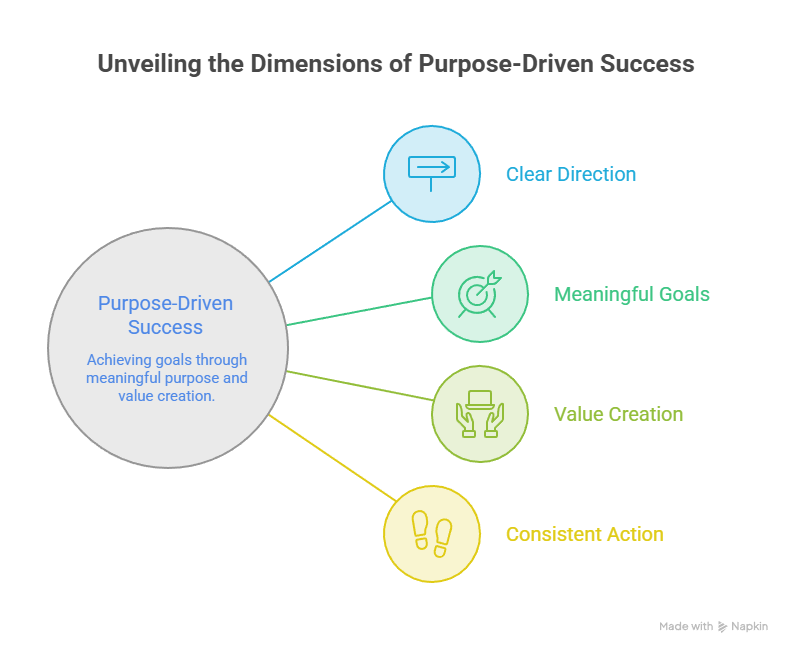
Life becomes more rewarding when you have a clear direction and meaningful goals to pursue. Purpose-driven success is not simply about accumulating money or achieving status. It is about deciding what you want to accomplish, creating value for others, and consistently taking action toward a worthwhile objective.
Every meaningful goal comes with challenges. Those challenges are not necessarily evidence that you are on the wrong path. Often, they are part of what makes achievement meaningful.
A fulfilling life is built through learning, persistence, disciplined action, and the willingness to keep moving toward a worthwhile vision.
The First Principle: Don’t Make Money the Only Goal
Money is an important part of modern life. It provides resources for housing, education, investments, business operations, and personal goals.
However, making money the sole purpose of your life can create an endless cycle of earning, spending, and chasing more.
A more sustainable approach is to view money as a tool, not the ultimate destination.
Money can help you:
- Build a business
- Develop products and services.
- Invest in assets
- Create employment
- Support your family
- Fund expansion
- Solve meaningful problems
- Create opportunities for others.
The important question isn’t simply:
“How much money can I make?”
A better question is:
“What valuable outcome am I trying to create, and what financial resources will I need to accomplish it?”
This shift in perspective can change how you approach work, business, and long-term planning.
Work Toward an Asset
An asset is generally something with economic value that can provide future benefits.
In business, examples can include:
- A profitable company
- Intellectual property
- A strong brand
- Real estate
- Technology
- Customer relationships
- Business systems
- Digital products
- Investments
Working toward assets can be more powerful than simply exchanging hours for income.
For example, an employee may be paid for completing a specific number of hours. An entrepreneur may spend years building a company whose value continues to exist beyond any individual workday.
The goal isn’t to avoid work. It is to use work to create something that can produce value beyond the immediate transaction.
Better Still: Work Toward a Cause That Helps People
The strongest form of purpose-driven success comes from creating something that improves conditions for other people.
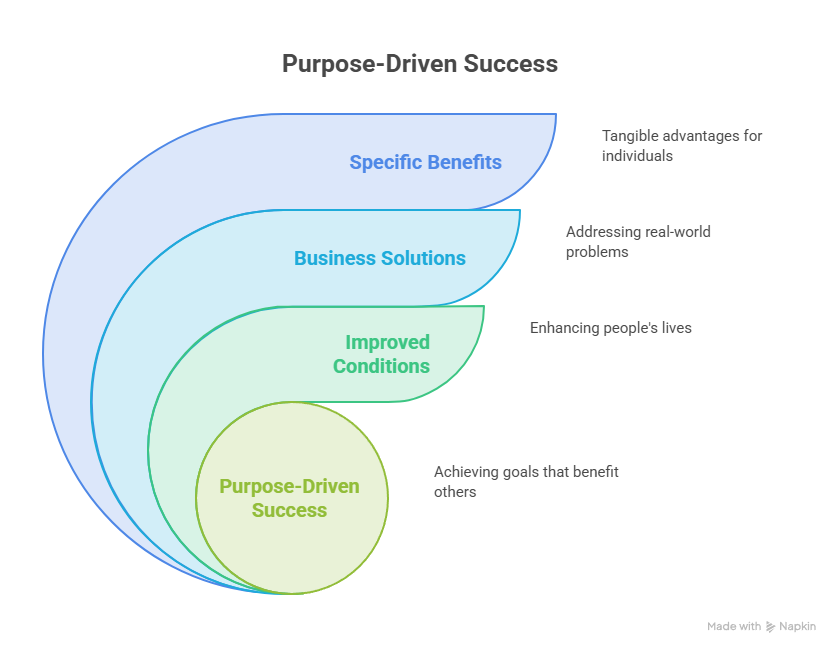
A business can make money while solving real problems.
Consider businesses that help people:
- Save time
- Improve their health or lifestyle.
- Learn new skills
- Become more productive
- Access useful products
- Build their own businesses.
- Solve difficult problems
- Communicate more effectively
When a business creates genuine value, revenue becomes a measurement of the value customers are willing to exchange for the solution.
This doesn’t mean profit is unimportant.
Profit is essential for sustainability.
Without adequate financial resources, even an excellent mission may eventually fail.
The principle is to make value creation and purpose the direction, while using money as one of the resources that makes the mission possible.
Ray Kroc: A Case Study in Vision and Persistence
The story of Ray Kroc and McDonald’s provides an interesting example of how vision, persistence, and business strategy can interact.
Kroc became involved with McDonald’s after encountering the restaurant concept developed by brothers Richard and Maurice McDonald. He recognized that their streamlined restaurant model had significant potential for expansion through franchising.
His vision went far beyond operating a single restaurant. He imagined McDonald’s locations expanding across the country.
However, his early franchise arrangement presented a significant financial challenge. The revenue available to Kroc was not enough to comfortably cover the costs associated with expansion.
The turning point came when Kroc recognized the potential of controlling the real estate associated with the restaurants.
This created a different business model and provided another source of economic value that supported expansion.
Eventually, Kroc acquired the McDonald’s business from the McDonald brothers.
The broader lesson is not simply about money.
It is about recognizing an opportunity, developing a vision, adapting when the original plan isn’t sufficient, and continuing to pursue the objective.
Vision Gives Persistence a Direction
Persistence by itself isn’t enough.
A person can work extremely hard while moving in the wrong direction.
The combination that creates powerful results is:
Vision + Planning + Action + Persistence + Learning
Vision tells you where you’re going.
Planning determines how you will get there.
Action creates movement.
Persistence keeps you moving when obstacles appear.
Learning allows you to change your approach when the original plan isn’t working.
This is why effective goal setting matters.
The Importance of Goal Setting
A meaningful goal gives your efforts a target.
Without a goal, it is easy to become busy without becoming productive.
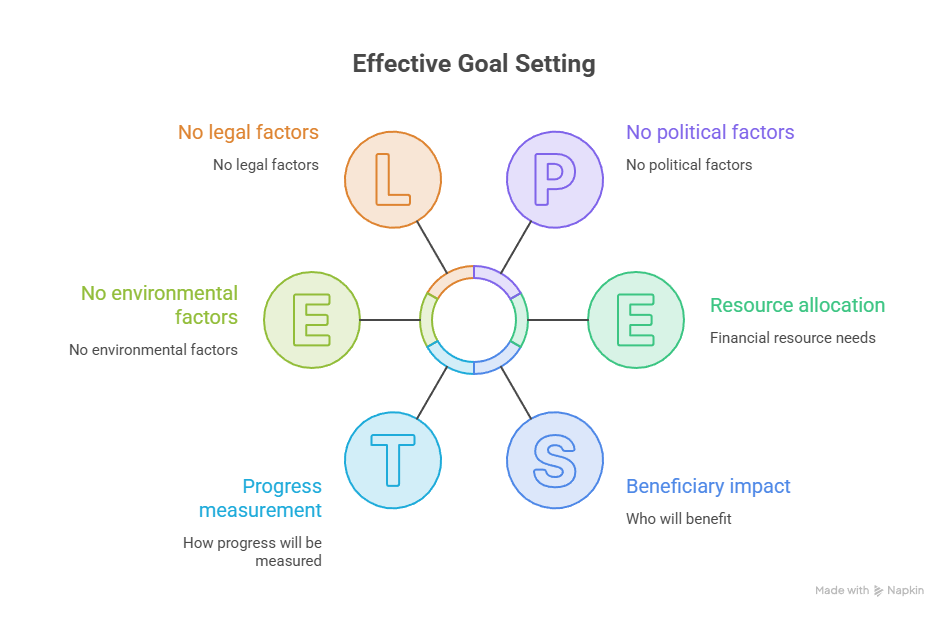
Effective goals should clarify:
- What you want to accomplish
- Why it matters
- Who will benefit
- What resources are required
- What obstacles may appear
- What actions must happen first?
- How progress will be measured
- When you want to achieve the objective
A goal becomes much more powerful when it is connected to a larger purpose.
For example:
Weak goal:
“I want to make more money.”
Stronger goal:
“I want to build a business that helps small companies improve their operations while generating enough profit to support continued growth.”
The second goal provides direction beyond income.
Money Is Part of the Plan
Rejecting money as the sole purpose of life does not mean ignoring financial management.
Money remains essential to business.
A company needs enough capital to:
- Pay employees
- Purchase inventory
- Invest in technology
- Market its products
- Maintain operations
- Handle unexpected expenses
- Expand into new markets.
- Build financial reserves
Good financial management enables a business to pursue its larger mission.
This is why money should be treated as a resource within the plan.
The objective is to generate sufficient revenue and profit to sustain and expand the organization while continuing to create meaningful value.
Avoid the Financial Rat Race
A person can earn a high income and still feel trapped.
Why?
Because income alone doesn’t determine financial freedom.
If increasing income is always followed by increasing debt, expenses, and lifestyle expectations, the individual can remain trapped in a cycle of financial pressure.
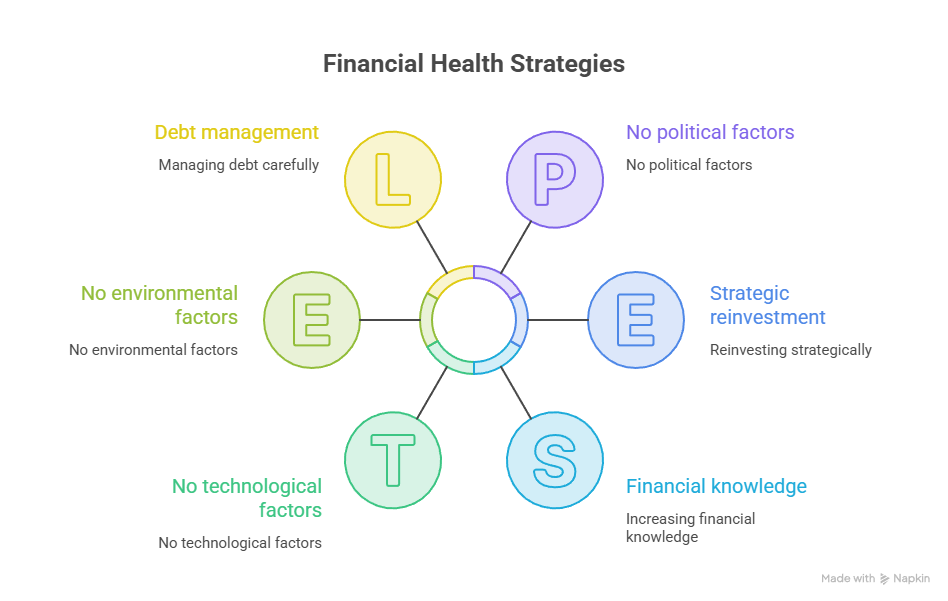
A more strategic approach is to focus on:
- Building productive assets
- Managing debt carefully
- Maintaining financial reserves
- Controlling unnecessary expenses
- Reinvesting strategically
- Developing multiple sources of value
- Increasing financial knowledge
The objective isn’t simply to earn more.
It is to build a financial structure that supports your larger goals.
Build Something That Can Outlive You
One of the most powerful aspects of a meaningful business vision is that its impact can continue beyond the founder.
A well-designed organization can create:
- Jobs
- Products
- Services
- Training
- Leadership opportunities
- Customer value
- Community benefits
- New businesses
This creates a legacy that is larger than the individual.
A company becomes particularly powerful when its systems, culture, and mission allow future generations of employees and leaders to continue improving it.
Persistence Is More Than Working Hard
Persistence doesn’t mean repeating the same action indefinitely.
True persistence includes the willingness to learn and adapt.
If a strategy fails, ask:
What did this experience teach me?
Then change the approach.
Effective persistence looks like:
Try → Measure → Learn → Adjust → Try Again
This is far more powerful than simply working harder without examining results.
Keep Learning
One of the greatest dangers to long-term success is complacency.
Markets change.
Technology changes.
Customer expectations change.
Competitors change.
The skills that created success yesterday may not be enough to create success tomorrow.
Continuous learning should therefore be part of your life strategy.
Study:
- Leadership
- Communication
- Finance
- Marketing
- Management
- Sales
- Technology
- Human behavior
- Strategy
- Operations
The more capable you become, the more effectively you can pursue your goals.
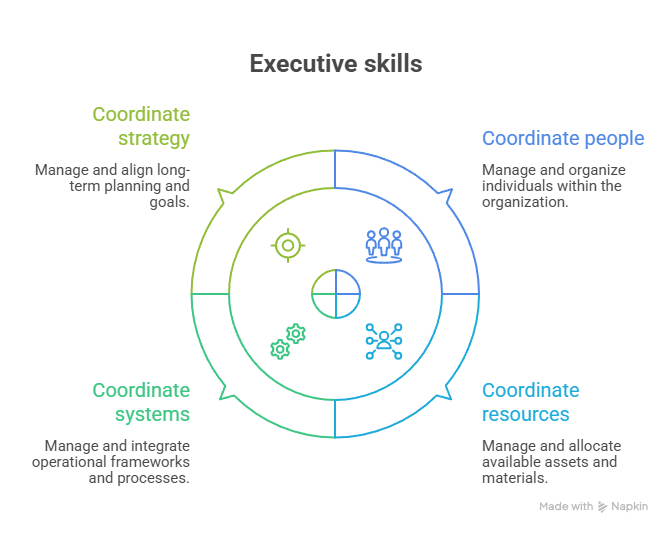
Develop Executive Skills
As a business grows, technical skills alone are no longer enough.
Entrepreneurs and leaders need executive skills that allow them to coordinate people, resources, systems, and strategy.
Important skills include:
Planning
Determine what needs to happen and in what order.
Delegation
Give the right responsibilities to the right people.
Communication
Make expectations, objectives, and priorities clear.
Decision-Making
Evaluate information and make timely decisions.
Financial Management
Understand revenue, costs, cash flow, profitability, and investment.
Leadership
Create an environment where people can perform and grow.
These capabilities turn a vision into an operating organization.
A Practical Framework for Purpose-Driven Success
You can use the following framework to develop a clearer direction for your own life and business:
1. Define the Vision
What do you ultimately want to create?
2. Identify Who Benefits
Who will be better off because your goal is accomplished?
3. Set Measurable Goals
Turn the vision into specific objectives.
4. Build the Plan
Identify the resources, people, systems, and actions required.
5. Create Financial Requirements
Determine how much money the plan requires and how you will fund it responsibly.
6. Take Consistent Action
Don’t wait for perfect circumstances.
7. Measure Results
Determine whether your actions are producing progress.
8. Learn and Adapt
Change your strategy when new information becomes available.
Don’t allow temporary setbacks to replace the larger objective.
The Valuable Lesson
The most important lesson is not that money doesn’t matter.
Money matters.
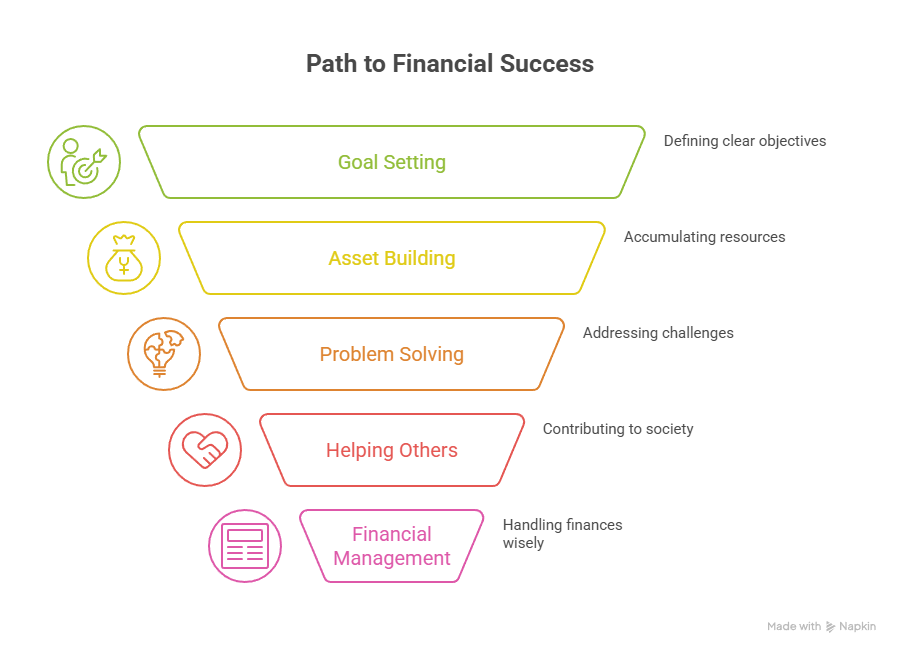
The lesson is that money works best when it serves a meaningful purpose.
Work toward goals. Build assets. Solve problems. Help people. Develop your capabilities. Manage money responsibly. Continue learning.
When financial success comes from creating genuine value rather than being the only objective, the journey can become more meaningful and sustainable.
Final Thoughts
A rewarding life requires more than earning an income. It requires direction.
Purpose-driven success begins with identifying a meaningful goal and committing to the actions necessary to achieve it.
Money can provide resources, but purpose provides direction. Assets can provide leverage, but vision determines how that leverage is used. Persistence creates momentum, while learning ensures that momentum is moving in the right direction.
The most important question is not simply:
“How much money can I make?”
Ask instead:
“What can I build, who can I help, and what meaningful result do I want to create?”
Set the goal. Build the plan. Learn continuously. Manage your resources wisely. Help people. Stay persistent.
When your work has purpose, and your actions are aligned with a meaningful vision, success becomes more than a financial measurement—it becomes evidence of a life intentionally lived.
Frequently Asked Questions About Purpose-Driven Success
What is purpose-driven success?
Purpose-driven success means pursuing meaningful goals that create value for yourself and others rather than focusing exclusively on money or status. It combines purpose, action, learning, financial responsibility, and long-term planning.
Why shouldn’t money be the only goal?
Money is an important resource, but making it the only objective can create an endless cycle of earning and spending. A stronger approach is to use money to support meaningful goals, build productive assets, solve problems, and create opportunities.
How does goal setting contribute to success?
Goal setting provides direction and makes it easier to prioritize actions, measure progress, and maintain focus. Clear goals turn a general vision into specific objectives you can pursue and evaluate.
What is the difference between a goal and a vision?
A vision describes the larger future you want to create, while goals are measurable milestones that help you move toward that vision. A strong vision provides direction, while specific goals provide a practical path forward.
What can entrepreneurs learn from Ray Kroc?
Ray Kroc’s story shows the importance of recognizing opportunities, developing a clear vision, adapting when circumstances change, and staying persistent. His success also illustrates how business models and assets can create additional expansion opportunities.
Is money necessary for business success?
Yes. Businesses need sufficient financial resources to operate, pay employees, invest in growth, manage risks, and serve customers. The key is to treat money as an important business resource, not the only reason for building the business.
What does it mean to work for an asset?
Working for an asset means investing effort into something that can provide future economic value. Examples include building a business, developing intellectual property, creating systems, acquiring productive investments, or building a valuable brand.
How can I create a more meaningful business goal?
Start by identifying a problem you genuinely want to solve. Determine who benefits from the solution, define the result you want to create, establish measurable objectives, and determine what resources and systems are required to achieve them.
Why is persistence important for achieving goals?
Meaningful goals usually involve obstacles and setbacks. Persistence helps you continue moving forward while learning from challenges. However, effective persistence also requires adapting your strategy when evidence shows that a different approach is necessary.
What skills are important for achieving long-term business goals?
Important skills include planning, leadership, communication, financial management, delegation, strategic thinking, sales, marketing, and decision-making. Continuous learning helps entrepreneurs strengthen these skills as their businesses evolve.
How can I avoid the financial rat race?
Focus on building productive assets, managing debt responsibly, maintaining financial reserves, controlling unnecessary expenses, and developing sustainable sources of income. Increasing income alone may not create financial freedom if expenses and debt grow at the same rate.
What is the most important principle for building a successful life?
Develop a meaningful vision, turn it into clear goals, take consistent action, learn from experience, manage resources responsibly, and create value for others. When your actions align with a worthwhile purpose, financial and professional success can become part of a much larger, more fulfilling objective.
Reading about better business strategies is a great start—but real change happens when you apply them to your own business.
Let SBM Business Centers help you take that next step. Schedule a complimentary Business Analysis and Consultation to identify areas for improvement, uncover growth opportunities, and develop a clearer direction for your business.
Call Vida Puodziunas at 813-906-0477 today to schedule your free consultation and start building a business that works better for you.