

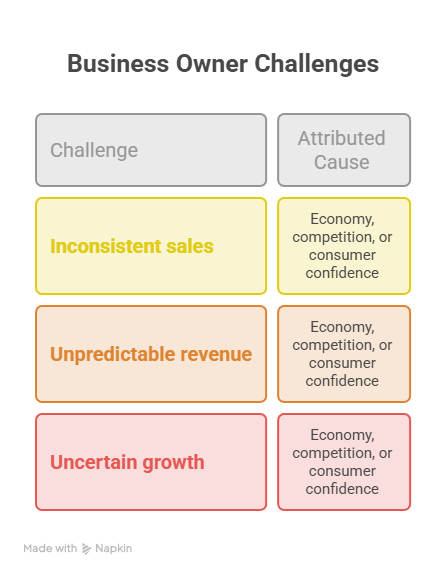
Many business owners work incredibly hard yet still struggle with inconsistent sales, unpredictable revenue, and uncertain growth. They often believe external conditions—such as the economy, competition, or consumer confidence are responsible for their success or failure.
While external factors certainly influence business, they rarely determine long-term success. More often, inconsistent performance is the result of inconsistent business marketing and a lack of strategic public relations (PR).
Successful businesses understand that marketing is not something you do only when sales decline. It is a continuous process of building relationships, creating visibility, earning trust, and consistently communicating your value to the marketplace.
The businesses that grow year after year are those that actively manage both attracting new customers and nurturing existing ones.
Why Many Businesses Struggle to Grow
When business owners have little formal training in marketing, public relations, or business management, several common challenges appear.
They often:
- Feel they are not fully in control of their business.
- Believe outside conditions determine their success.
- Struggle to understand why sales fluctuate.
- React to problems instead of preventing them.
- Depend primarily on referrals instead of proactive lead generation.
- Experience significant highs and lows in revenue.
- Lose momentum after periods of success.
- Invest in marketing inconsistently.
These challenges are rarely caused by poor products or services.
Instead, they usually result from inconsistent communication with the marketplace.
The Two Essential Types of Business Marketing
One of the biggest misconceptions in marketing is believing all customers should be marketed to in the same way.
In reality, successful organizations manage two distinct marketing systems simultaneously.
1. Marketing to New Customers
The first objective is attracting people who have never purchased from your business.
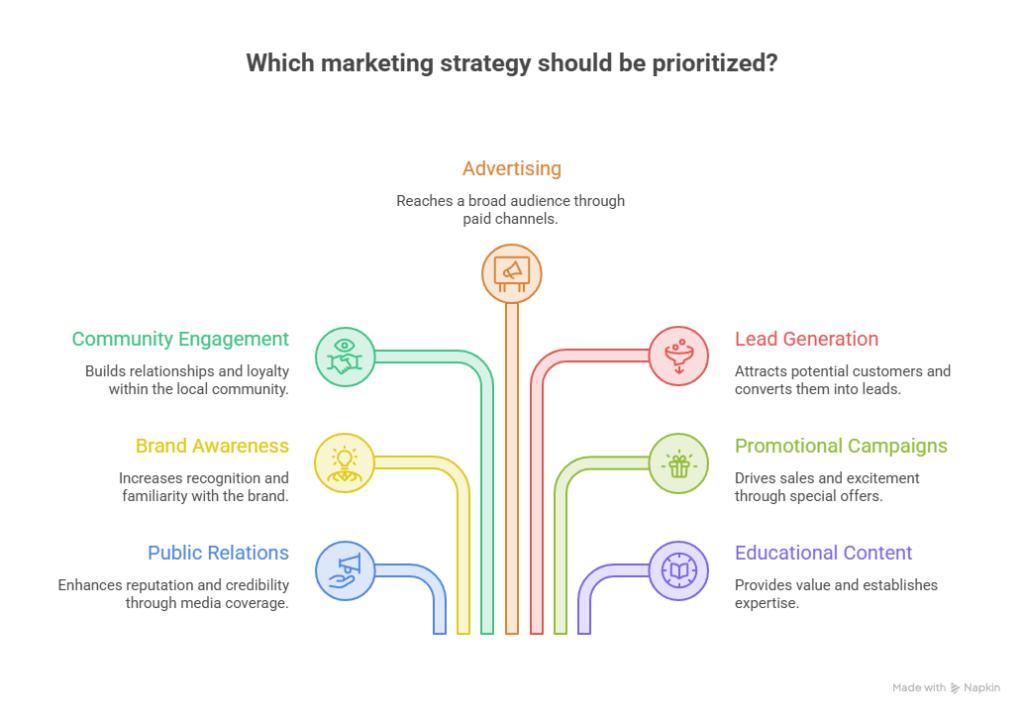
This requires a combination of:
- Public relations
- Brand awareness
- Community engagement
- Advertising
- Lead generation
- Promotional campaigns
- Educational content
These activities introduce your business to new audiences and establish trust before asking for a sale.
2. Marketing to Existing and Past Customers
The second objective is maintaining regular communication with customers who already know and trust your business.
This includes:
- Email newsletters
- Educational content
- Loyalty programs
- Special offers
- Product updates
- Customer appreciation campaigns
- Follow-up communication
- Referral programs
Existing customers are often the easiest and most profitable people to serve because the relationship already exists.
Businesses that consistently communicate with past customers typically experience higher customer retention, repeat sales, and referrals.
Both marketing systems must operate continuously.
Neither should replace the other.
Public Relations: The Foundation of Business Marketing
Before customers purchase from a company, they usually need confidence in the organization.
This is where public relations becomes invaluable.
Public relations focuses on creating goodwill within the community by demonstrating genuine value without immediately asking for a sale.
Examples include:
- Supporting community events.
- Sponsoring local organizations.
- Providing educational workshops.
- Sharing expert advice.
- Participating in charitable activities.
- Publishing helpful articles.
- Speaking at industry events.
- Building relationships with local organizations.
Good public relations increases visibility while establishing credibility.
People naturally prefer doing business with organizations they recognize, trust, and respect.
Promotion Turns Attention Into Customers
Once goodwill has been established, promotion becomes significantly more effective.
Promotion communicates:
- Your products
- Your services
- Your pricing
- Your expertise
- Your unique value
- Your competitive advantages
Advertising without trust often produces disappointing results.
Public relations creates trust.
Promotion creates awareness.
Together they generate qualified leads and long-term customer relationships.
The most effective marketing strategies combine both consistently.
People Buy From Businesses They Trust
Trust remains one of the strongest influences on purchasing decisions.
Customers rarely choose businesses based solely on price.
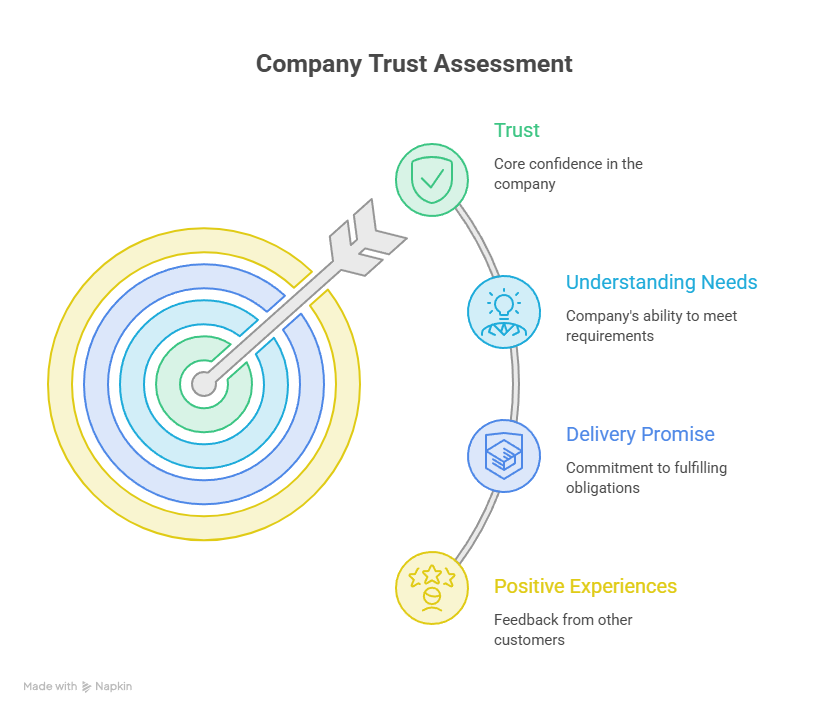
Instead, they ask themselves questions such as:
- Can I trust this company?
- Do they understand my needs?
- Will they deliver what they promise?
- Have others had positive experiences?
Consistent communication, valuable content, positive community involvement, and professional customer service all strengthen trust.
Over time, trust becomes one of the greatest competitive advantages a business can possess.
Marketing Is More Than Advertising
Many organizations mistake advertising for marketing.
Advertising is only one component of a complete marketing strategy.
Effective business marketing also includes:
- Public relations
- Brand positioning
- Customer education
- Reputation management
- Social media engagement
- Email marketing
- Search engine optimization (SEO)
- Customer retention
- Referral generation
- Community involvement
The more ways customers encounter your business positively, the more likely they are to choose you when they need your products or services.
Marketing Also Attracts Better Employees
Marketing principles extend beyond attracting customers.
They also influence recruitment.
Many employers believe qualified candidates no longer exist.
In reality, businesses often fail to market employment opportunities effectively.
Traditional job advertisements frequently focus on what the company expects from applicants.
Successful recruitment marketing instead highlights what employees gain, including:
- Career advancement
- Professional development
- Ongoing training
- Supportive leadership
- Competitive benefits
- Positive workplace culture
- Meaningful work
- Long-term opportunities
People are attracted to organizations that invest in their future.
Just as customers buy solutions, prospective employees seek opportunities.
Survey Your Market Regularly
Customer preferences constantly evolve.
Economic conditions change.
Workforce expectations shift.
Technology influences buying behavior.
Successful businesses continuously gather feedback through surveys, customer interviews, online reviews, and employee feedback.
Questions worth asking include:
- What problems are customers currently facing?
- What additional services would they value?
- Why do customers choose competitors?
- What improvements would existing clients appreciate?
- What motivates talented professionals to join an organization?
Businesses that regularly collect market intelligence make better decisions than those relying on assumptions.
Customer Retention Is One of the Highest-ROI Marketing Strategies
Acquiring new customers is important.
Keeping existing customers is even more valuable.
Customer retention often costs significantly less than acquiring new business while producing higher lifetime customer value.
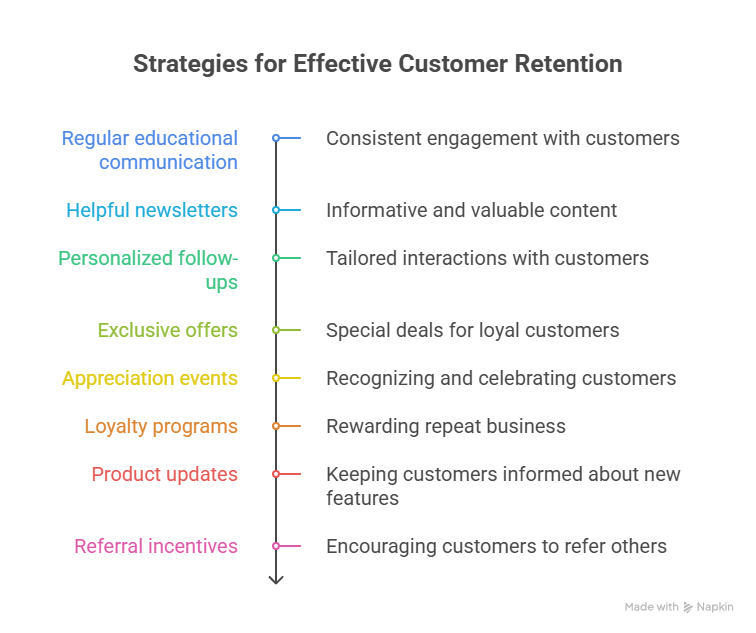
Effective customer retention includes:
- Regular educational communication.
- Helpful newsletters.
- Personalized follow-ups.
- Exclusive offers.
- Appreciation events.
- Loyalty programs.
- Product updates.
- Referral incentives.
Staying visible ensures your business remains top of mind when customers need your services again.
Measure Your Marketing Performance
Successful marketing should never rely on guesswork.
Business leaders should monitor key performance indicators (KPIs), including:
- Number of new leads
- Conversion rates
- Cost per lead
- Customer acquisition cost
- Customer retention rate
- Website traffic
- Email engagement
- Referral volume
- Social media engagement
- Return on marketing investment (ROMI)
These measurements identify what is working and where improvements are needed.
What gets measured gets improved.
The Power of Consistent Communication
There is something powerful about consistently communicating with your community.
Every article published.
Every educational email.
Every networking event.
Every customer conversation.
Every community contribution.
Every helpful social media post.
Each interaction increases awareness, strengthens trust, and expands your reach.
Businesses that remain visible are remembered.
Businesses that disappear from public attention are eventually forgotten.
Consistency creates familiarity.
Familiarity builds trust.
Trust generates business.
Final Thoughts
Business marketing is far more than advertising products or services. It is the ongoing process of building trust, creating visibility, strengthening relationships, and communicating value to both prospective and existing customers.
Organizations that combine effective public relations, strategic promotion, customer retention, and consistent communication position themselves for predictable, sustainable growth.
The businesses that thrive through changing economies are not always those with the largest budgets.
They are the ones that consistently show up, contribute value, measure results, and remain visible within their communities.
When uncertainty arises, don’t reduce your marketing efforts.
Increase your communication.
Strengthen your relationships.
Continue building goodwill.
Businesses that stay connected with their customers and communities create opportunities that fuel long-term success.
Frequently Asked Questions
1. Why is business marketing important?
Business marketing increases brand awareness, attracts qualified leads, builds customer trust, improves customer retention, and creates consistent revenue growth through ongoing communication and relationship building.
2. What is the difference between public relations and marketing?
Public relations focuses on building goodwill, credibility, and trust within the community, while marketing promotes products and services to generate leads and sales. Together, they create a stronger and more effective business growth strategy.
3. Why should businesses market to existing customers?
Existing customers are more likely to make repeat purchases, refer others, and remain loyal to a business. Regular communication keeps your company top of mind and increases customer lifetime value.
4. How can marketing help recruit better employees?
Employer marketing highlights career opportunities, company culture, professional development, and employee benefits. Promoting these advantages attracts qualified candidates who align with your organization’s mission and values.
5. What marketing metrics should every business track?
Businesses should monitor key metrics such as lead generation, conversion rates, customer acquisition cost, customer retention rate, website traffic, email engagement, referral volume, and return on marketing investment (ROMI) to continually improve marketing performance.
If you have any questions or would like to learn how SBM Business Centers can help your business increase profitability, improve operations, and achieve sustainable growth, we’d love to talk with you. Schedule a complimentary business consultation and discover the opportunities within your organization. Contact Vida Puodziunas today at 813-906-0477.