

If you’ve been following my recent letters, you’ve noticed a recurring theme: the shift from a worker, technician, or skilled-professional mindset to a true executive mindset. This single shift is the difference between a business that owns you and a business you actually own.
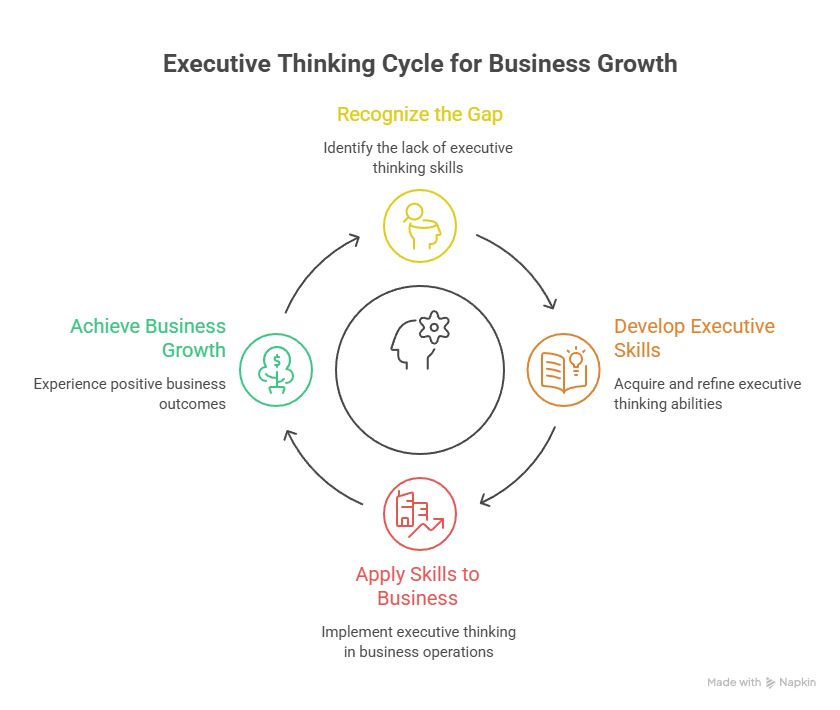
Here’s the uncomfortable truth: roughly 99% of people have never been trained to think like an executive. That gap explains a great deal about why so many capable, hardworking people stay stuck — and why understanding how to scale a small business starts in your head long before it shows up on your balance sheet.
Why an Executive Mindset Matters Beyond Business
The need for an executive mindset isn’t limited to entrepreneurs. Consider government. Even when an executive-minded leader is elected, they’re often surrounded by people who have never developed delegation and leadership skills or systems thinking. The result is predictable: continued borrowing, rising debt, and stagnation.
Put a few genuinely executive-minded people at the helm, and you see a different outcome — the financial bleeding slows, runaway borrowing stops, inflation eases, and stability returns. The principle scales from a corner shop to a country: organizations rise or fall on the thinking of the people running them.
The Small Business Battle: Why Good Businesses Stay Small
A lack of executive training is the single biggest reason a small business stays small. The owner is rarely trained as an executive, so the habit of doing the work themselves is never broken. They take on jobs until they physically cannot take on any more — and then growth stops, capped by one person’s available hours.
For a non-executive-minded owner, building a large organization is a slow grind. Their internal belief is: “Building a business takes a lot of hard, personal, technical work.”
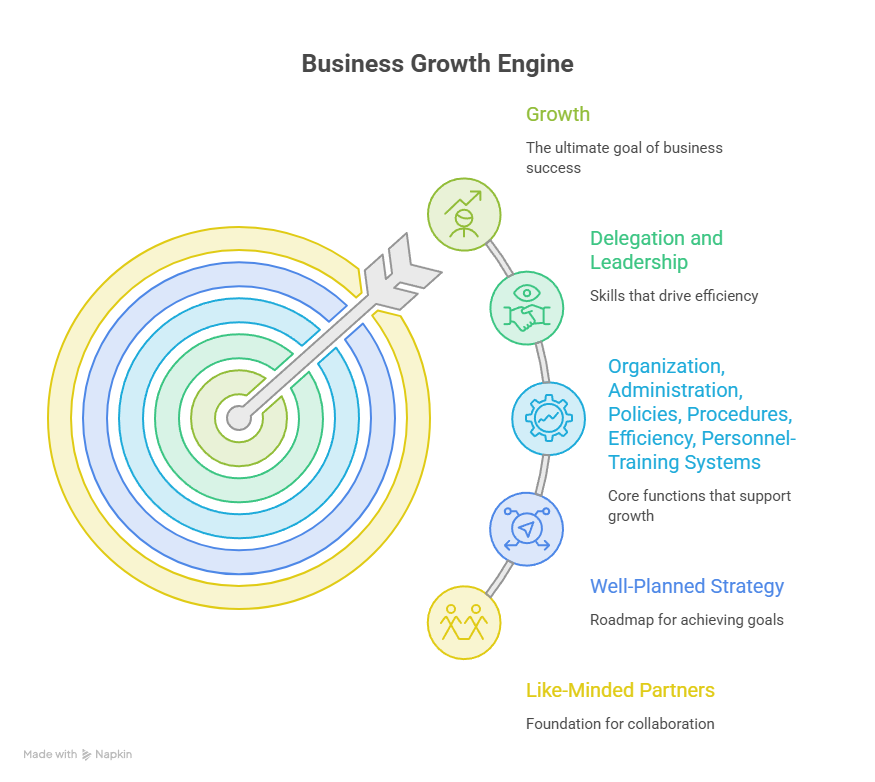
An executive-minded owner believes something different: building a business takes like-minded partners, a well-planned strategy, and delegating work as fast as possible. That frees them to focus on what actually compounds — organization, administration, policies, procedures, efficiency, and personnel-training systems. This is where delegation and leadership skills stop being buzzwords and become the engine of growth.
The 7 Core Differences Between a Worker Mindset and an Executive Mindset
The clearest way to understand the executive mindset is to compare it directly with the worker mindset across the situations every business owner faces.
1. Viewpoint and Identity
| Worker-Minded | Executive-Minded |
| “I must do the work.” | “I must ensure the work gets done.” |
| Sees themselves as the top worker. | Sees themselves as the leader of people and systems. |
| Focuses on tasks. | Focuses on outcomes and results. |
| Believes productivity = personal effort. | Believes productivity = the organization running smoothly and expanding. |
2. Daily Behavior
| Worker-Minded | Executive-Minded |
| Fixes problems personally. | Ensures no one person becomes a bottleneck — including themselves. |
| Jumps into production and technical tasks. | Delegates production and keeps attention on direction. |
| Constantly busy, wearing multiple hats. | Operates from dashboards, KPIs, statistics, and planning tools. |
| Puts out a lot of fires. | Builds systems so the fires don’t start again. |
3. Reaction to Problems
| Worker-Minded | Executive-Minded |
| Reacts emotionally or urgently. | Responds analytically and strategically. |
| Solves the same problem repeatedly. | Identifies the root cause so it doesn’t repeat. |
| Thinks: “It’s faster if I just do it myself.” | Thinks: “If I do it myself, we stay small forever.” |
4. Time Allocation
| Worker-Minded | Executive-Minded |
| Spends 80–90% of time working in the business. | Spends 80–90% of time working on the business. |
| Lives in the urgent. | Lives in the important. |
| Day is controlled by others’ emergencies. | Controls the flow of work through planning and forecasting. |
5. Information Used to Make Decisions
| Worker-Minded | Executive-Minded |
| Relies on gut feelings and opinions. | Relies on statistics, financial reports, KPIs, and production metrics. |
| Makes emotional decisions. | Makes rational, data-based decisions. |
6. Leadership Style
| Worker-Minded | Executive-Minded |
| Micromanages. | Delegates and holds people accountable. |
| Doesn’t trust others to handle tasks. | Builds competent people and systems. |
| Creates dependence on themselves. | Creates independence and scale. |
7. Results Over Time
| Worker-Minded | Executive-Minded |
| Burnout, frustration, stagnation. | Growth, expansion, free time, scalability. |
| Business relies on one person. | Business becomes a machine that runs without them. |
How the Two Mindsets Sound in Real Life
The difference becomes obvious in how each owner responds to everyday problems.
The worker-minded owner says:
- “The customer is upset? I’ll handle it.”
- “The report is wrong? I’ll redo it.”
- “The marketing campaign failed? I’ll rewrite it myself.”
- “They can’t sweep the floor correctly — I’ll just do it.”
They end the week exhausted, feeling like nothing moved forward, even though they were busy every single minute.
The executive-minded owner says:
- “The customer is upset? Who owns customer complaint resolution, and what does our process say?”
- “Show me the report and the metrics that reveal where the breakdown happened.”
They end the week knowing exactly what improved, what grew, and what will expand next.
The Mindset Shift in One Sentence
Worker-Minded: “If I’m not working, the business fails.” Executive-Minded: “If the business depends on me doing the work, it has already failed.”
And the core difference, stated plainly:
A worker-minded executive solves problems. An executive-minded executive solves why the problem exists.
That second sentence is the whole game. Solving a problem clears today’s obstacle. Solving why the problem exists removes it permanently — and removing problems permanently is how you build an organization that grows without consuming you.
A Practical Example of the Shift
Imagine two shops that both struggle with late deliveries.
The worker-minded owner personally calls each late customer, apologizes, and rushes the next order out the door. The problem is “solved” — until tomorrow, when it happens again.
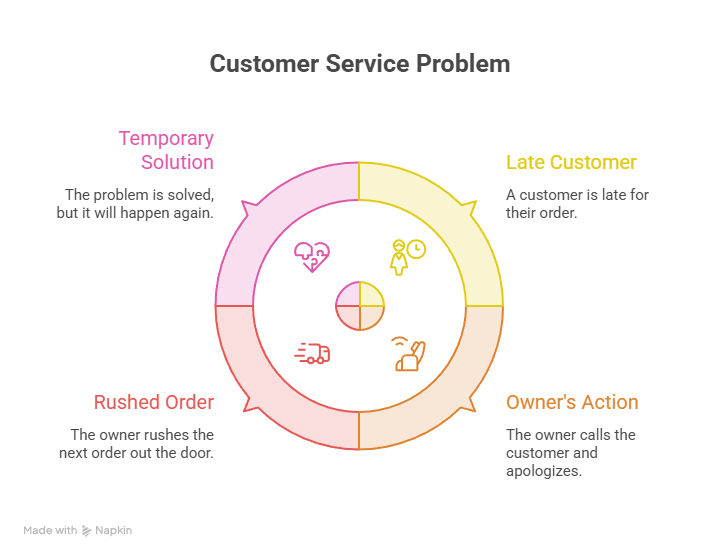
The executive-minded owner asks a different question: why are deliveries late? They discover orders pile up because one step has no clear owner. They assign responsibility, document the process, and add a simple tracking metric. Within weeks, late deliveries stop being a recurring fire. The owner didn’t work harder — they worked on the system, and the system now works for them.
What It Takes to Make the Switch
Adopting an executive mindset isn’t about personality or talent. It comes down to three things, in order:
- Executive training — learning the actual skills of organization, delegation, and management that most people are never taught.
- Willingness to change — being honest that the old “I’ll just do it myself” habit is the very thing keeping you small.
- Forming new habits — practicing executive behaviors until they replace the worker reflex and become automatic.
Master these three, and you stop being the hardest-working bottleneck in your own company — and start being the leader who builds something that lasts.
Ready to Make the Shift?
If this was helpful and you’d like coaching or staff training on executive and management skills, email or call Vida or Victor at 813-906-0477.
And if you’re interested in helping train executives in your area, call me — let’s get something going.