

Building a successful business is rarely luck. Most businesses that achieve significant expansion rely on a combination of strategic planning, experimentation, strong leadership, and the right people working together.
Successful business owners continuously test new products, improve services, study their markets, and develop systems that allow the organization to grow. Business partnerships can be one of the most powerful ways to accelerate that process—provided the partners share a common vision, complementary skills, and a strong commitment to the organization.
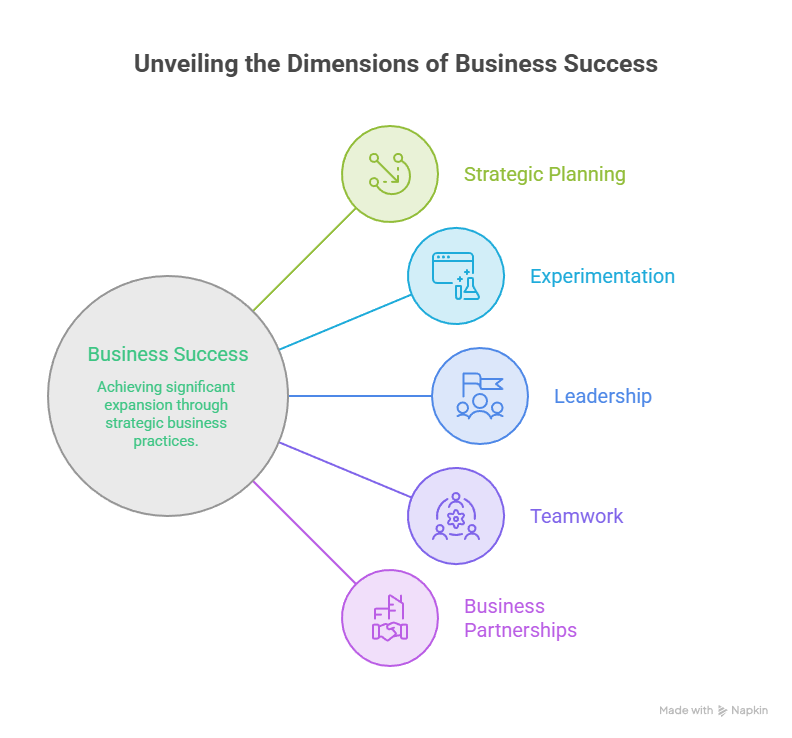
The right partnership can bring together expertise, capital, leadership, creativity, and accountability. The wrong partnership, however, can create conflict and become a serious obstacle to growth.
Understanding what makes partnerships work—and recognizing the knowledge required to manage an expanding organization—is essential for long-term success.
The First Mystery Point: The Power of the Right Business Partner
One of the most important lessons in business growth is that you do not always have to build the company alone.
A strong business partner can provide another perspective, complementary expertise, additional leadership capacity, and shared responsibilities that would otherwise fall entirely on the business owner.
The ideal partner does not necessarily have the same skills you have. In fact, complementary capabilities can strengthen a partnership.
For example, one partner might excel in:
- Operations and production
- Quality control
- Finance and administration
- Marketing and sales
- Technology and systems
- Leadership and people development
The goal is not to duplicate each other’s abilities. The goal is to create a leadership team that is stronger together than either person would be alone.
What Makes a Strong Business Partnership?
Successful business partnerships are built on more than friendship or enthusiasm. They require compatible values, clear expectations, accountability, and a shared vision for the future.
A strong partner should be someone who:
- Shares the company’s long-term vision
- Is highly responsible and dependable
- Communicates openly
- Takes initiative
- Can make decisions independently
- Brings complementary expertise
- Is willing to contribute to the company’s development
- Can be trusted with important responsibilities
- Handles disagreements professionally
- Remains focused on the organization’s goals
Trust is particularly important. You should feel comfortable discussing difficult issues with your partner and be confident they can protect the business and make sound decisions when you are unavailable.
Establish Clear Partnership Agreements
Good relationships are important, but they should not replace formal business structures.
Before entering a partnership, establish a written agreement that clearly defines:
- Ownership percentages
- Roles and responsibilities
- Decision-making authority
- Financial contributions
- Profit distributions
- Performance expectations
- Intellectual property ownership
- Conflict-resolution procedures
- What happens if a partner leaves
- How ownership can be transferred or sold
Develop the exact legal structure and terms with qualified legal and financial professionals, because partnership laws and tax requirements vary by location.
The objective is simple: clarity before conflict.
A written agreement gives partners a framework for handling difficult situations before emotions take over.
Divide Responsibilities to Improve Business Performance
A partnership becomes much more effective when responsibilities are clearly divided.
For example, one partner might oversee:
Operations and Quality
This can include production, service delivery, quality control, staffing, and operational efficiency.
Another partner might oversee:
Administration, Marketing, and Sales
This can include financial administration, customer acquisition, marketing strategy, sales management, and business development.
Clearly defined responsibilities prevent duplicated work and reduce confusion about who is accountable for specific results.
As the organization grows, you can add additional executives and managers to the leadership group.
Eventually, this group becomes a strategic think tank—a team of experienced people who can analyze problems, develop opportunities, and make decisions that move the organization forward.
Protect the Partnership From Internal Conflict
One of the greatest threats to a business partnership is not necessarily competition. It can be conflict within the leadership team.
Disagreements are normal in business. What matters is how partners handle them.
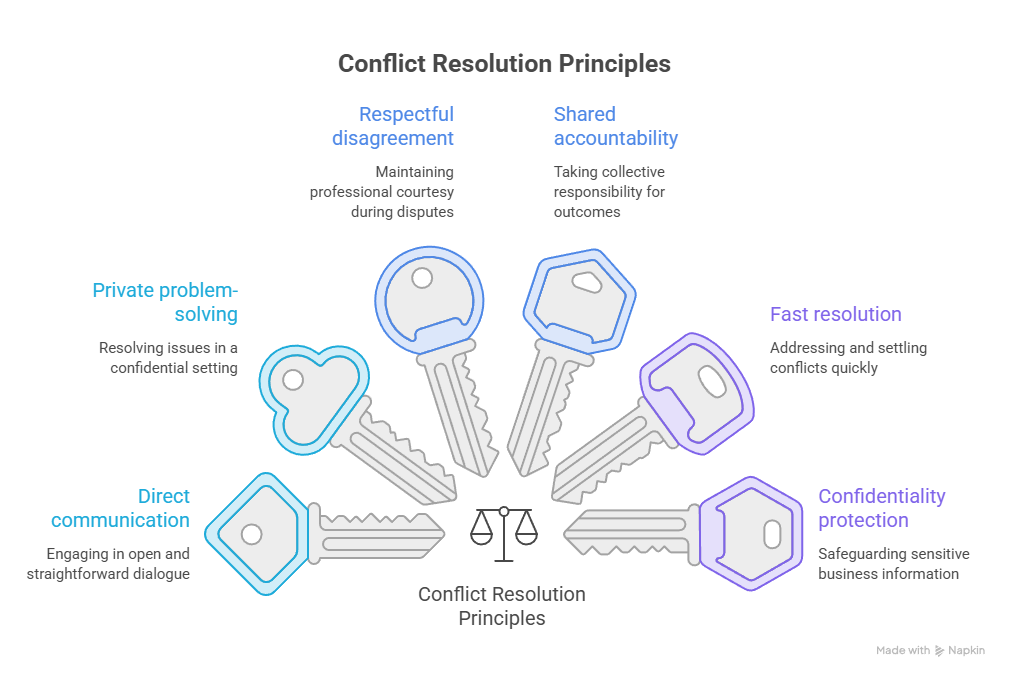
Partners should avoid allowing disagreements to become personal or allowing outside criticism to damage internal trust.
When concerns arise, address them directly and quickly with the person involved.
A healthy partnership encourages:
- Direct communication
- Private problem-solving
- Respectful disagreement
- Shared accountability
- Fast resolution of conflicts
- Protection of confidential business information
Leadership conflict doesn’t stay at the top. Employees notice it, departments become divided, and organizational momentum can suffer.
A united leadership team creates stability throughout the organization.
Why Collaboration Can Accelerate Business Growth
Trying to manage every part of a growing company alone can become exhausting.
The owner may eventually become responsible for sales, operations, finances, employees, customer service, marketing, strategy, and countless daily decisions.
This creates what can be called the owner’s hamster wheel—working harder without creating enough additional capacity for growth.
Strategic collaboration can break this cycle.
With the right people involved, leaders can:
- Share decision-making
- Develop new revenue opportunities.
- Enter new markets
- Improve operational systems
- Expand management capacity
- Develop new products and services.
- Solve complex problems faster.
This is why business partnerships can be particularly valuable during periods of expansion.
The objective isn’t simply to divide the workload. It is to increase the organization’s overall capacity to think, execute, and grow.
The Second Mystery Point: What You Don’t Know Can Limit Growth
One of the biggest barriers to expansion isn’t always a lack of effort.
It is a lack of knowledge.
Business owners often know a great deal about their industry, product, or service. But successful expansion requires knowledge beyond the technical aspects of the business.
You need to understand:
- Leadership
- People management
- Financial management
- Organizational structure
- Marketing
- Sales
- Strategic planning
- Delegation
- Systems development
- Business development
The challenge is that you cannot always recognize a knowledge gap when you don’t know it exists.
This is why continuous learning and collaboration are essential to sustainable growth.
Move From Technician to Executive
A business owner can become trapped by being excellent at the company’s technical work.
For example, a skilled contractor may spend most of the day performing construction work. A talented consultant may spend nearly all their time serving clients. A restaurant owner may spend every day solving operational problems.
These activities may generate revenue, but they can prevent the owner from focusing on higher-level responsibilities.
As a business grows, the owner’s role needs to evolve.
Instead of doing everything personally, the owner should increasingly focus on:
- Vision
- Strategy
- Leadership
- Financial performance
- People
- Systems
- Expansion opportunities
- Long-term planning
Delegation is not about avoiding work. It is about moving the right work to the right level of the organization.
Build Systems That Support Business Growth
Growth becomes difficult when the company depends entirely on the owner.
A scalable organization needs repeatable systems that allow employees and managers to perform consistently.
Important systems may include:
Sales Systems
Create a consistent process for generating leads, following up with prospects, closing sales, and retaining customers.
Operations Systems
Document procedures so employees understand how to complete important tasks.
Training Systems
Develop employees continuously so the organization has a growing pool of capable people.
Management Systems
Establish measurable goals, performance expectations, communication routines, and accountability.
Financial Systems
Monitor revenue, expenses, profitability, cash flow, and other key performance indicators.
These systems create organizational stability and make expansion more predictable.
Collaboration Creates New Opportunities
Partnerships don’t have to be limited to co-ownership.
Businesses can collaborate through:
- Strategic alliances
- Joint ventures
- Referral partnerships
- Supplier relationships
- Professional networks
- Technology partnerships
- Marketing collaborations
- Shared services
- Industry partnerships
For example, a marketing company could collaborate with a web development firm, while a business consultant could partner with an accounting or legal professional.
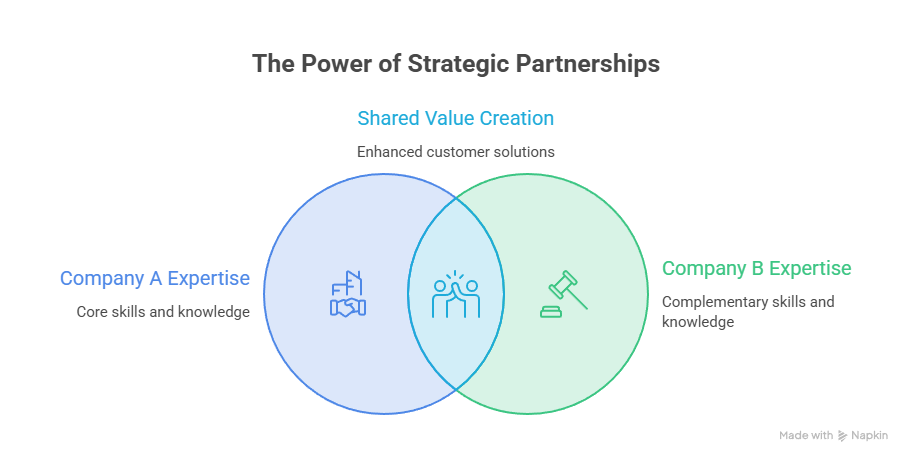
Each company maintains its own expertise while creating additional value for customers.
The key is ensuring that every collaboration has clearly defined expectations and benefits for all parties.
How to Choose the Right Business Partner
Before entering a partnership, ask difficult questions.
Do we share the same vision?
Different long-term goals can create conflict later.
Do our skills complement each other?
The strongest partnerships often combine different areas of expertise.
Can we communicate honestly?
Partners need to discuss problems without avoiding difficult conversations.
Do we have similar standards?
Differences in work ethic, integrity, or accountability can quickly damage a partnership.
Can I trust this person with the business?
Trust should be demonstrated through consistent actions, not simply assumed because of a personal relationship.
Have we discussed what happens when things go wrong?
A partnership agreement should address difficult scenarios before they occur.
Continuous Learning Is a Business Growth Strategy
Business owners should never become complacent about what they already know.
Markets change. Customer expectations evolve. Technology advances. Competitors introduce new strategies. Employees develop new expectations.
What worked five years ago may not work today.
Continuous learning helps business owners recognize opportunities and identify problems before they become crises.
Investing in education, coaching, mentoring, industry research, and experienced advisors can expand the organization’s capabilities and improve decision-making.
Business growth strategies become much more effective when they are based on current knowledge rather than assumptions.
Create a Leadership Team That Can Scale
As a company expands, the owner should gradually build a leadership team capable of carrying greater responsibility.
The objective is to create an organization that does not stop functioning whenever the owner steps away.
A strong leadership team should be able to:
- Make informed decisions
- Solve problems
- Manage employees
- Protect company standards
- Identify opportunities
- Monitor performance
- Execute strategic plans
This creates what can be called a self-sustaining organization—one where growth is supported by systems and capable people, not constant owner intervention.
Final Thoughts
The path to business growth is rarely accidental. Sustainable expansion comes from deliberate decisions, strategic planning, continuous learning, strong systems, and the right people.
The right business partnerships can dramatically increase an organization’s capabilities by combining complementary skills, shared responsibility, and different perspectives.
At the same time, business owners must recognize that growth requires more than knowing how to deliver a product or service. They must continually develop their knowledge of people, leadership, organization, finance, and strategy.
A successful business should be able to grow and operate without placing every responsibility on one person.
With the right partners, effective collaboration, capable leaders, and scalable systems, you can move beyond the daily operational grind and create an organization designed for sustainable growth.
Business growth becomes easier when you stop trying to do everything yourself and start building the people, partnerships, and systems that can grow with the business.
Frequently Asked Questions About Business Partnerships
What is a business partnership?
A business partnership is a relationship between two or more individuals or organizations that work together toward shared business objectives. Partners may contribute capital, expertise, leadership, resources, or industry connections to help grow the business.
How can business partnerships help a company grow?
Strategic business partnerships can accelerate growth by combining complementary skills, sharing responsibilities, expanding resources, and creating access to new customers, markets, and opportunities. The right partner can also provide additional leadership capacity as the company expands.
What makes a successful business partnership?
Successful business partnerships are built on trust, communication, shared goals, accountability, complementary skills, and clearly defined responsibilities. Partners should also establish a formal agreement that explains ownership, decision-making, financial responsibilities, and how potential disputes will be handled.
Should business partners have different skills?
Yes. Complementary skills can strengthen a partnership. For example, one partner may specialize in operations and management while another focuses on marketing, sales, finance, or business development. Combining different strengths can create a more capable leadership team.
Why is communication important in a business partnership?
Open communication helps partners identify problems early, make better decisions, and maintain trust. Partners should address disagreements directly rather than allowing unresolved issues to affect employees, customers, or business operations.
What should be included in a partnership agreement?
A partnership agreement should address important areas such as ownership, roles and responsibilities, decision-making authority, financial contributions, profit distribution, dispute resolution, partner withdrawal, and procedures for transferring ownership. Obtain professional legal advice to ensure the agreement complies with applicable laws.
How can collaboration create new business opportunities?
Business collaboration can help organizations access new markets, customers, technology, expertise, and resources. Partnerships can take many forms, from strategic alliances and joint ventures to referral relationships, marketing collaborations, and supplier partnerships.
What Holds Business Owners Back From Sustainable Growth
One common mistake is attempting to manage every aspect of the business personally. As a company grows, owners need to delegate responsibilities, develop capable leaders, establish systems, and spend more time on strategy instead of getting trapped in daily operations.
How does continuous learning support business growth?
Continuous learning helps business owners recognize changing market conditions, improve leadership skills, identify new opportunities, and make better strategic decisions. Expanding knowledge in areas such as people management, finance, marketing, and organizational development can support more sustainable growth.
Can a business succeed without a business partner?
Yes. Many successful businesses are built and operated by a single owner. However, growth can become easier when owners develop strong leadership teams, strategic partnerships, advisors, or collaborators who provide expertise and capacity that the owner does not have alone.
How do you know if someone is the right business partner?
Look for someone who shares your long-term vision, demonstrates integrity and accountability, communicates openly, complements your skills, and is willing to contribute meaningfully to the business. Before forming a partnership, discuss expectations, responsibilities, finances, decision-making, and potential exit scenarios.
If you enjoyed this article and would like to learn more about how these strategies can apply to your business, we’d love to connect with you.
SBM Business Centers offers a complimentary Business Analysis and Consultation to help you identify opportunities, uncover challenges, and determine the next steps toward building a stronger, more profitable business.
Contact Vida Puodziunas at 813-906-0477 to schedule your free Business Analysis and Consultation.