

Every successful organization is built on more than systems, processes, and strategies—it is built on people. When employees are motivated, aligned, and committed to a shared purpose, businesses achieve higher productivity, stronger collaboration, and sustainable growth. At the heart of this success lies team morale.
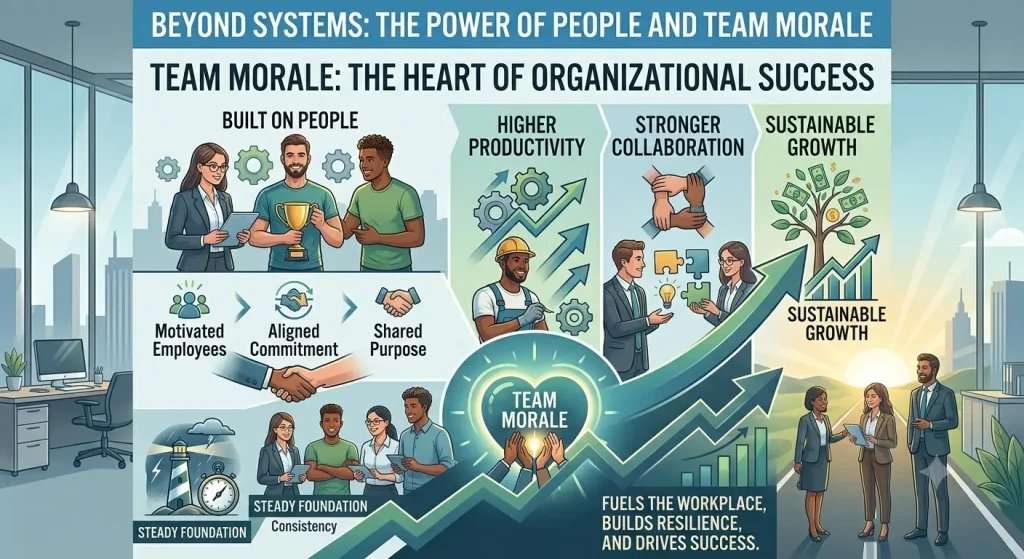
High team morale creates an environment where people enjoy contributing, solving problems together, and achieving common goals. Conversely, low morale weakens communication, reduces productivity, and creates a culture where negativity, blame, and disengagement become the norm.
If a business wants to improve performance, increase employee engagement, and build a resilient workplace culture, boosting team morale should become a leadership priority.
Why Team Morale Matters
Team morale is the collective attitude, confidence, and enthusiasm of employees toward their work, colleagues, and the organization. It directly influences productivity, collaboration, innovation, customer service, and employee retention.
Organizations with high employee morale experience greater teamwork because employees trust one another, communicate openly, and work toward shared objectives. On the other hand, organizations that tolerate criticism, blame, and negativity often struggle with declining performance, increased staff turnover, poor communication, and lower customer satisfaction.
Morale is not simply about making employees happy—it is about creating an environment where every individual feels valued, supported, and motivated to contribute their best work.
The Hidden Cost of Negativity in the Workplace
One of the fastest ways to weaken an organization is to allow destructive criticism, blame, and negative conversations to become part of the company culture.
Although these behaviors may appear harmless at first, they gradually undermine trust and cooperation. Employees become hesitant to communicate openly, departments begin working in isolation, and collaboration deteriorates.
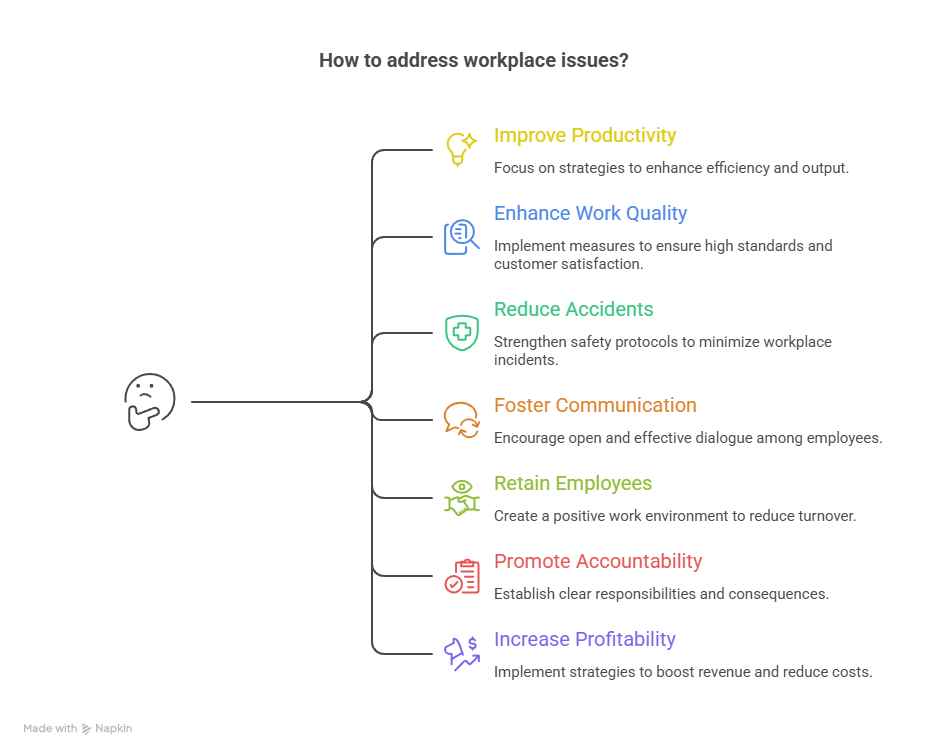
The consequences of a negative workplace culture can include:
- Reduced productivity
- Lower work quality
- Increased workplace accidents
- Poor communication
- High employee turnover
- Lack of accountability
- Decreased customer satisfaction
- Reduced profitability
When negativity becomes accepted, people spend more time defending themselves than solving problems.
Successful organizations recognize that every negative interaction has a ripple effect throughout the business.
Alignment Creates Stronger Teams
A business functions as an interconnected system where every department contributes to the final outcome. Marketing, sales, operations, finance, customer service, and administration all depend on one another to achieve organizational success.
When employees criticize one another or blame departments for problems, alignment disappears.
High-performing organizations approach challenges differently.
Instead of asking:
“Who is responsible for this problem?”
They ask:
“What process failed, and how can we improve it?”
This simple shift changes the entire culture of an organization.
Teams become solution-oriented instead of blame-oriented.
Individuals take ownership of their responsibilities while supporting others to achieve collective success.
Alignment creates trust.
Trust improves communication.
Communication improves productivity.
Productivity drives business growth.
Eliminate the Blame Culture
Blame is often a symptom of weak leadership rather than poor employee performance.
Organizations where finger-pointing, excuses, and criticism are common usually lack clear systems, accountability, and effective management.
Strong leaders understand that problems should be solved through facts, measurable data, and continuous improvement—not personal attacks.
One of the most effective leadership policies is simple:
No destructive criticism. No blaming. Only solutions.
When leaders consistently reinforce this standard, employees begin focusing their energy on solving problems instead of assigning fault.
A culture of accountability replaces a culture of excuses.
High Morale Drives High Performance
Every successful coach, executive, and manager understands that morale is one of the strongest drivers of business performance.
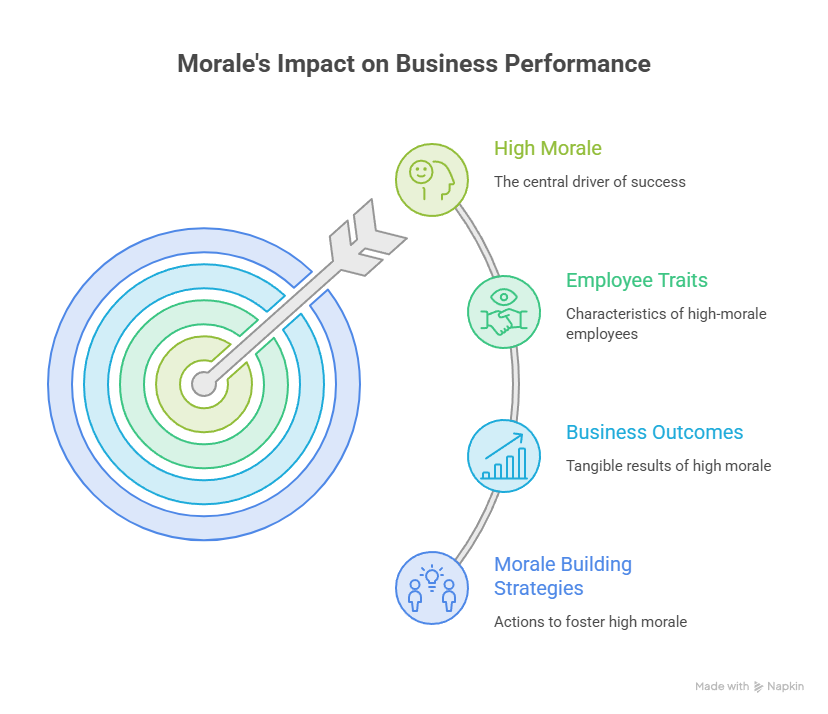
Employees with high morale demonstrate greater commitment, creativity, resilience, and initiative. They willingly support teammates, contribute ideas, and maintain a positive attitude during challenging situations.
Research consistently shows that engaged employees produce higher-quality work, provide better customer service, and remain with organizations longer.
High morale is not created through motivational speeches alone.
It is built through clear expectations, measurable goals, consistent leadership, recognition, and meaningful progress.
Measure Performance with Clear Statistics
One of the fastest ways to improve employee morale is by giving every team member a clear understanding of what success looks like.
Every role should have:
- Clearly defined responsibilities
- Measurable performance indicators (KPIs)
- Weekly production targets
- Transparent expectations
- Regular feedback
Statistics provide employees with an objective scoreboard.
They know exactly where they stand.
Managers no longer rely on opinions or assumptions.
Instead, performance discussions become constructive, fair, and focused on improvement.
Clear measurement eliminates unnecessary emotional reactions and replaces uncertainty with confidence.
Recognition and Rewards Increase Employee Motivation
People naturally enjoy achieving goals and being recognized for their accomplishments.

Organizations that celebrate success build stronger employee engagement because recognition reinforces positive behaviors and motivates individuals to continue improving.
Effective recognition programs may include:
- Employee awards
- Performance bonuses
- Team celebrations
- Public acknowledgment
- Career advancement opportunities
- Professional development incentives
Recognition does not always require financial rewards.
A sincere acknowledgment of excellent work often has a lasting positive impact on employee morale.
Create Healthy Competition Through Team Goals
Friendly competition encourages employees to challenge themselves while working together toward shared objectives.
Weekly and quarterly goals create excitement, accountability, and a sense of achievement.
Departments should understand how their contributions support the organization’s larger mission.
When the entire company reaches a major quarterly objective, celebrating the achievement together reinforces the message that success belongs to everyone.
Shared victories strengthen teamwork and create lasting organizational unity.
Build a Positive Workplace Culture
Positive workplace cultures do not happen by accident.
They are intentionally created through leadership behaviors that encourage respect, accountability, collaboration, and continuous improvement.
Successful organizations promote values such as:
- Mutual respect
- Open communication
- Shared responsibility
- Constructive feedback
- Continuous learning
- Problem-solving
- Trust
- Professional growth
When these values become part of everyday operations, employees naturally support one another and remain focused on achieving organizational goals.
Leadership Sets the Standard
The culture of any organization reflects the behavior that leadership chooses to encourage or tolerate.
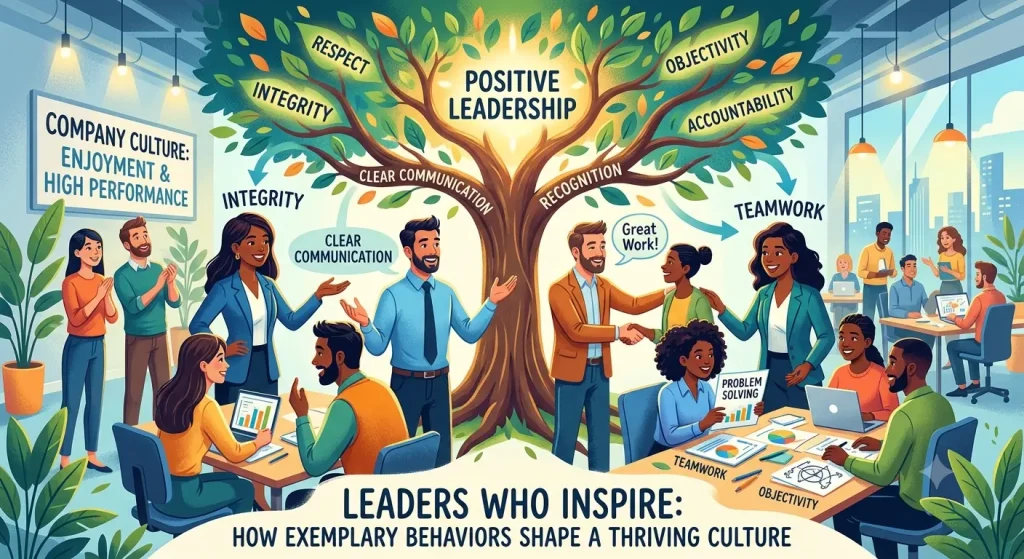
Leaders who ignore workplace negativity unintentionally allow it to spread.
Leaders who consistently promote accountability, respect, and teamwork create organizations where people enjoy working and performing at their highest level.
Employees observe leadership behavior every day.
When leaders demonstrate integrity, communicate clearly, recognize achievement, and solve problems objectively, those behaviors become part of the company culture.
Four Principles of High-Performing Teams
The strongest organizations operate according to four simple principles:
- No blame
- No destructive criticism
- Full responsibility
- Complete alignment toward shared results
These principles encourage trust, accountability, and collaboration while eliminating unnecessary conflict.
When consistently practiced, they create resilient teams capable of sustained growth and long-term success.
Final Thoughts
Boosting team morale is one of the most effective investments any organization can make. High employee morale strengthens communication, increases productivity, improves employee retention, and creates a workplace where people are motivated to achieve outstanding results.
Leadership plays the defining role in shaping this environment. By eliminating negativity, promoting accountability, recognizing achievement, measuring performance, and aligning every employee toward shared goals, organizations build cultures where both people and businesses thrive.
Remember, morale is not simply about creating a happier workplace—it is about creating a stronger, more productive organization where every individual contributes to collective success.
Frequently Asked Questions
1. What is team morale?
Team morale is the overall attitude, motivation, confidence, and satisfaction of employees within a workplace. High team morale leads to stronger collaboration, increased productivity, better communication, and improved employee engagement.
2. How can leaders improve team morale?
Leaders can improve team morale by recognizing employee achievements, setting clear goals, encouraging open communication, eliminating blame, providing regular feedback, rewarding performance, and creating a positive workplace culture built on trust and accountability.
3. Why is employee morale important for business success?
Employee morale directly impacts productivity, customer service, teamwork, innovation, and employee retention. Organizations with high morale often experience better business performance, lower staff turnover, and stronger long-term growth.
4. What causes low team morale?
Low team morale is often caused by poor communication, unclear expectations, lack of recognition, workplace negativity, ineffective leadership, excessive criticism, limited career development opportunities, and a culture that focuses on blame instead of solutions.
5. How do performance metrics improve team morale?
Performance metrics provide employees with clear expectations and measurable goals. When individuals understand how success is measured and receive recognition for achieving targets, they gain confidence, remain motivated, and contribute more effectively to the organization’s overall success.
Every successful business reaches a point where the next stage of growth requires a new perspective, better systems, and a clear strategy. Whether you’re looking to increase profits, improve operations, strengthen your team, or build a business that can thrive without depending on you every day, we’re here to help.
At SBM Business Centers, we don’t believe in one-size-fits-all solutions. We take the time to understand your business, identify opportunities for improvement, and provide practical strategies you can implement immediately.
Schedule your complimentary Business Analysis and Consultation today. Together, we’ll evaluate where your business stands, identify your greatest opportunities for growth, and create a roadmap toward greater profitability, efficiency, and long-term success.
To schedule your free consultation, contact Vida Puodziunas at 813-906-0477. We look forward to helping you build a stronger business and a brighter future.